

Health-conscious travelers and wellness seekers looking to experience Bozeman’s natural hot springs and sauna facilities.
Why Bozeman Hot Springs Sauna Should Be On Your Montana Itinerary
I stumbled into Bozeman Hot Springs on a February afternoon when my legs were screaming from three days of backcountry skiing. The facility sits about 8 miles west of downtown Bozeman on Highway 191, tucked against the Gallatin Range where you can see Spanish Peaks jutting up behind the property.
What separates this place from your average hotel spa is the combination—you’re not just getting a sauna. You’re cycling between dry heat, mineral pools fed by actual geothermal springs (around 98-106°F depending on the pool), and cold plunges, all while staring at mountains that still have snow in June. The water here comes from 2,500 feet underground, pulling up minerals like calcium and silica that supposedly help with muscle recovery and skin stuff, though honestly I just know my IT band felt better after an hour of rotation.
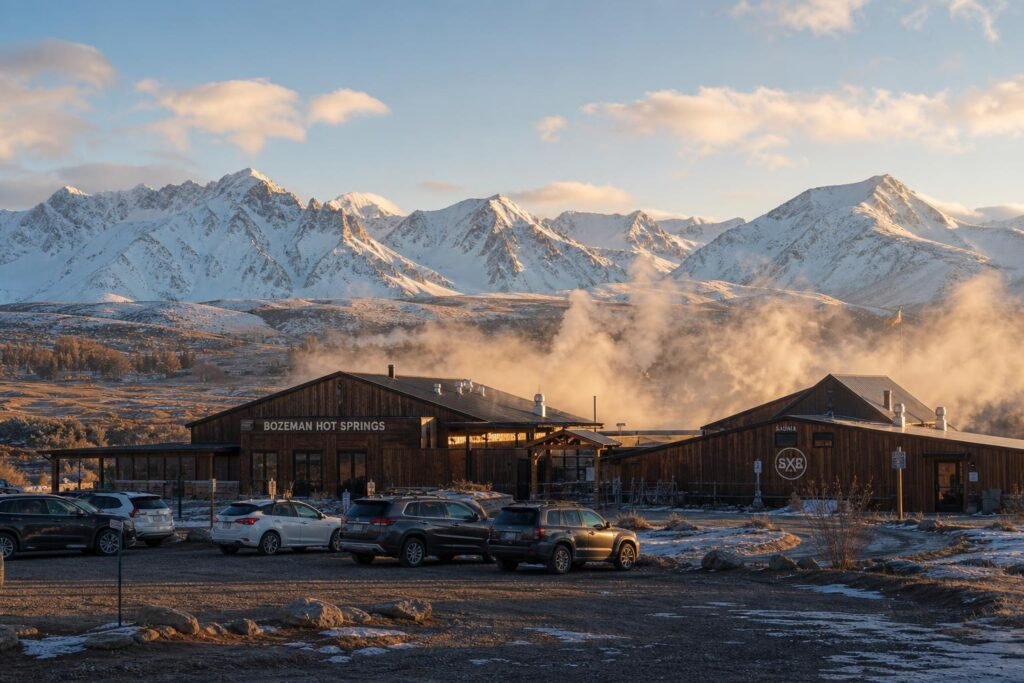
The sauna facilities opened in their current form around 2018 after a renovation. Before that it was more rustic, the kind of place locals would show up in ratty towels. Now it’s polished but not precious—you’ll see families, serious athletes doing contrast therapy, and the occasional tourist who read about it on some wellness blog.
Most people spend 2-3 hours here. Day passes run $16.50 for adults, $13.50 for kids 12 and under. If you’re staying in Bozeman more than a couple days, a 10-visit punch card drops it to about $13 per visit. They’re open 8am-10pm most days, till 11pm on weekends.
The real benefit is the contrast therapy setup. Your body gets the circulatory boost from moving between hot and cold, which speeds up recovery if you’ve been hiking or skiing hard. I’m not a doctor, but every physical therapist I know swears by this protocol. And doing it outside when it’s 20°F makes the sauna feel that much more essential.
Understanding the Different Sauna Options at Bozeman Hot Springs
Bozeman Hot Springs runs three sauna types, each in its own small building on the pool deck. The traditional Finnish dry sauna is the one I use most—benches on two levels, thermometer usually reading 170-180°F, that particular smell of cedar and sweat that means someone just poured water on the rocks. It seats maybe 10 people if everyone’s friendly.
The heat in a Finnish sauna is aggressive. Your skin prickles in the first minute. By minute five you’re breathing through your mouth and wondering if this was smart. By minute eight, if you’ve done it right, everything loosens. I typically do 10-12 minutes, cold plunge for 90 seconds, then repeat. Three rounds is the sweet spot before my body stops cooperating.
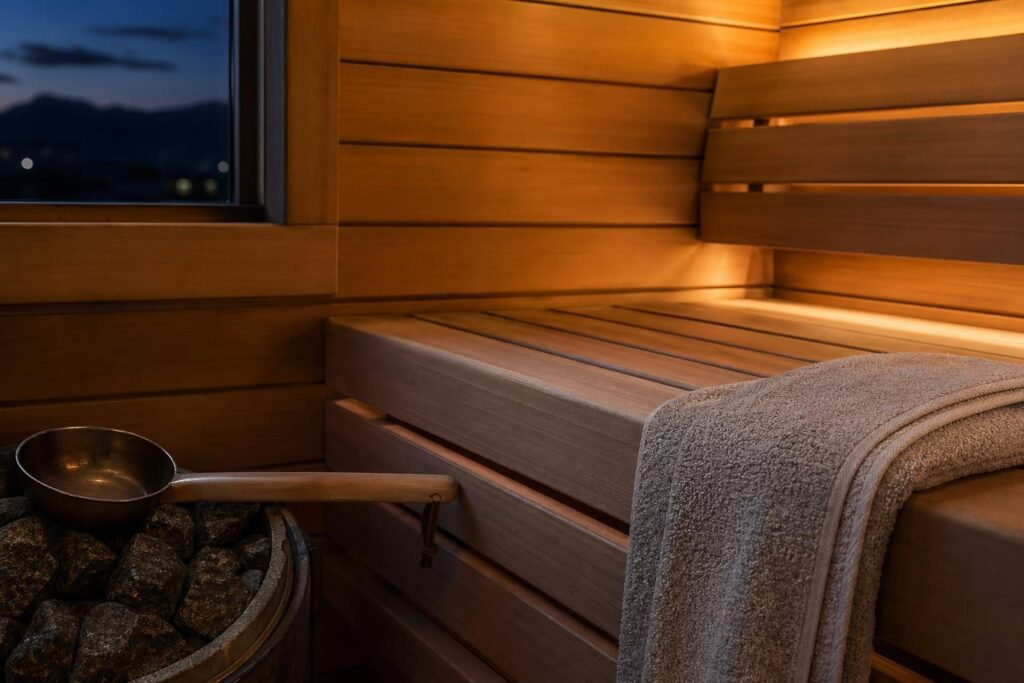
Their infrared sauna is gentler, running around 120-140°F. Infrared heats your body directly instead of heating the air, so it’s less claustrophobic if you’re not used to high temps. People with blood pressure issues often prefer this one. The booth is smaller, fits 4-5 people max. I find it less satisfying because I’m chasing that full sweat-dripping detox feeling, but my partner likes it better for longer 20-minute sessions.
The steam room sits at maybe 110-115°F but humidity is near 100%, which makes it feel hotter than the numbers suggest. Eucalyptus scent pumps in periodically. This one’s best for respiratory stuff—if you’ve been breathing cold dry Montana air for days, ten minutes here opens everything up. The tile gets slippery, and visibility drops to about three feet when the steam cycles on.
Here’s what I actually do: Start with 10 minutes in the Finnish sauna, cold plunge, then 15 minutes soaking in the hottest mineral pool. Second round is 8 minutes steam room, cold plunge, float in the warm pool. Final round is back to Finnish for 10 minutes, longest cold plunge I can stand (usually 2 minutes by then), then I’m done.
The locals will tell you the Finnish sauna between 7-9pm is prime time. Fewer kids, and there’s an unspoken protocol where people stay quiet and respect the rotation.
Planning Your Visit: Best Times and What to Bring
I’ve learned the hard way that timing matters here. Weekday mornings before 10am are dead quiet—you’ll have entire pools to yourself. After 4pm any day, especially weekends, it’s a zoo. Families, tour groups, everyone.
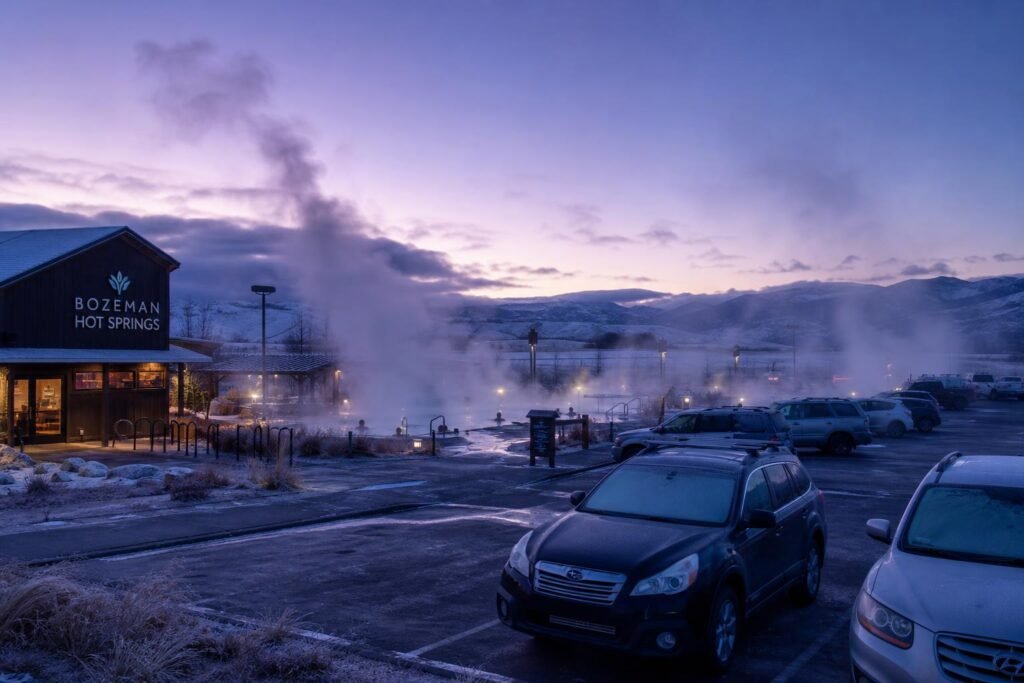
Winter visits hit different. Steam rising off the pools when it’s 15°F outside, snow on your shoulders while you’re chest-deep in 106°F water. But the saunas get packed because nobody wants to be outside between soaks. Summer? You can sprawl out on the lawn between sessions, and the evening light around 7pm is ridiculous.
Most people overthink what to bring. The facility provides towels if you pay the $5 rental fee, but they’re those thin gym ones. I bring my own because I want something actually absorbent. They sell water bottles on-site for $3, which feels steep when you’re chugging four of them.
Pack: swimsuit (obviously), flip-flops for the deck, a water bottle you can refill, and a hair tie if you have long hair. The mineral content makes it stringy. Some people bring their own soap for the showers, though there’s basic stuff provided. I ended up using a small dry bag from Matador for my phone and keys because the lockers are fine but I’m paranoid. ↗ Matador
Don’t bring: anything you can’t get wet, glass containers (not allowed), or expectations of a luxury spa. This is Montana. It’s clean and functional, not Instagram-perfect.
Maximizing the Health Benefits: Sauna and Hot Springs Rotation Protocol
The staff here will tell you “listen to your body,” which is useless advice when you don’t know what you’re doing. Here’s what actually works.
Start in a hot pool—the 104°F one—for 10-12 minutes. Not longer. Your heart rate should elevate but you shouldn’t feel lightheaded. Then move to the sauna. The traditional Finnish one runs around 170-180°F. Eight minutes max on your first round.
Here’s the thing everyone misses: you need a proper cooldown between. Jump in the cold plunge (around 55°F) for 30 seconds if you can handle it, or just sit outside for three minutes. Your body needs that contrast to get the circulation benefit. Then hydrate. Not sip—actually drink 8-10oz of water.
Second rotation: back to a different hot pool, maybe the 106°F, for another 10 minutes. Then the infrared sauna if they have availability. It’s gentler, around 140°F, so you can stay 12-15 minutes. The heat penetrates different, feels like it’s working deeper into your shoulders and lower back.
I do three full rotations over two hours. Some wellness people online push four or five rounds, but that’s how you end up dizzy in the parking lot. The locals I’ve talked to—the ones who come three times a week—they all say three.
The order matters less than the contrast and the rest periods. Your body does its repair thing during the cooling phase, not while you’re cooking. And if you skip hydration, you’ll feel like garbage by round two. I keep a 32oz bottle poolside and finish it before I leave.
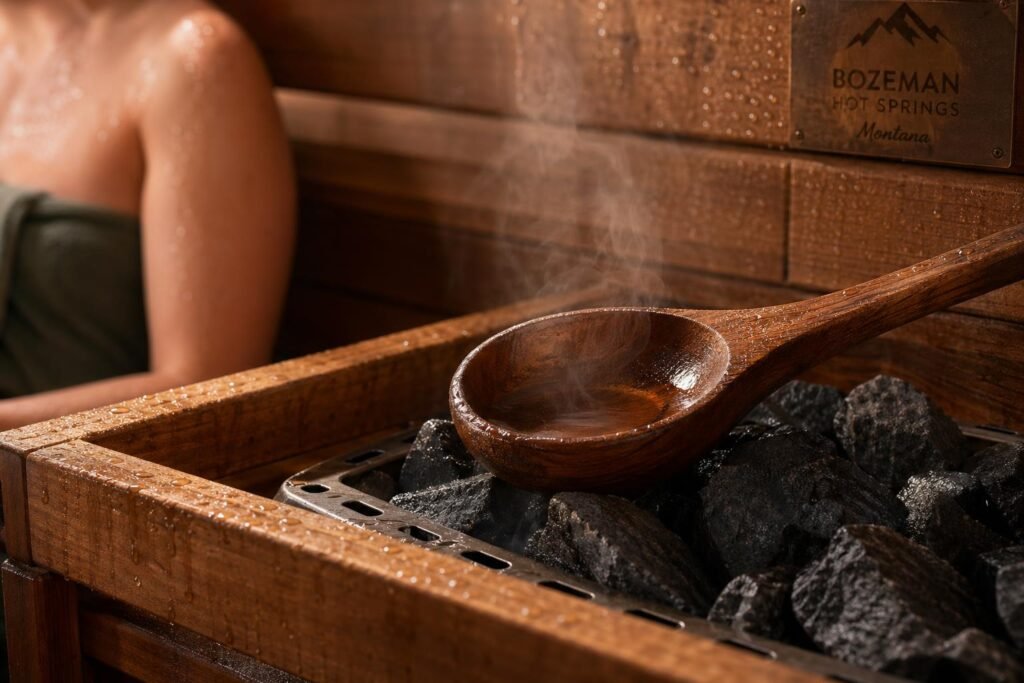
Wooden ladle resting on sauna rocks with visible steam wisps, one person’s shoulder and arm barely visible in soft focus background, sweat beading on wood slats
Where to Stay Near Bozeman Hot Springs for Easy Access
The hot springs sit about eight miles west of downtown Bozeman on Gallatin Road, which sounds close until you’re dealing with January temperatures and don’t want to Uber back at 9 PM in wet hair.
I’ve stayed at the Element Bozeman twice specifically for hot springs trips. It’s maybe three miles away, has an actual hot breakfast (not just muffins), and the front desk keeps a stack of Bozeman Hot Springs discount passes. Runs $140-180 depending on season. The pool’s heated year-round if you want to ease into the hot springs thing gradually.
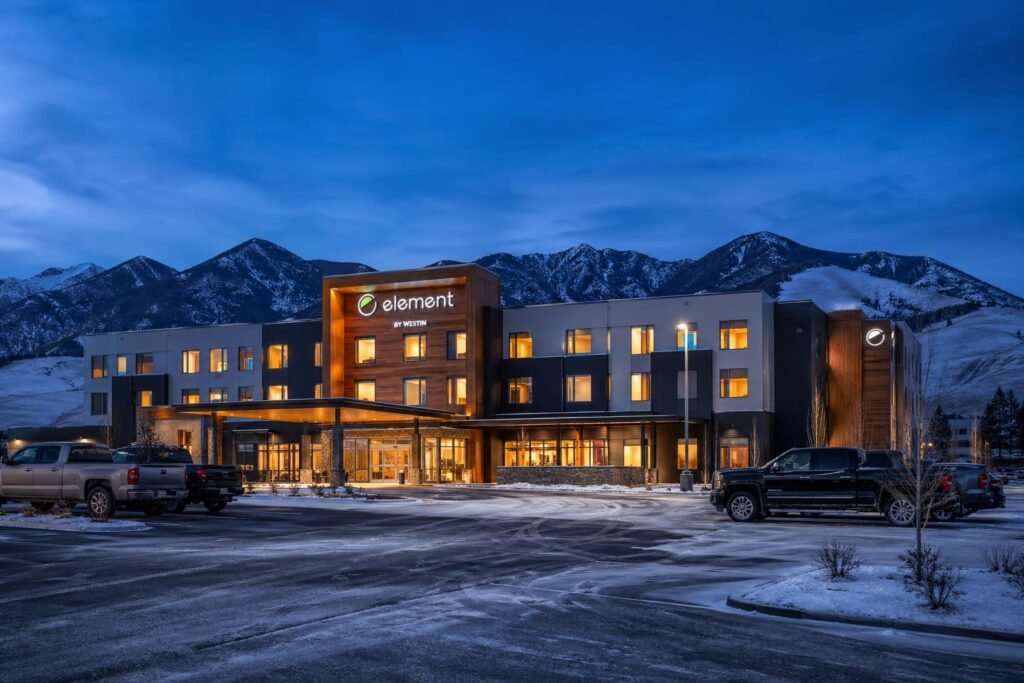
Snow-dusted modern hotel facade with warm lobby lights glowing, pickup trucks in parking lot, Bridger Mountains visible as dark silhouette behind.
Budget people do fine at the Ramada on Baxter Lane—$85-110 most nights, clean enough, free parking. You’re looking at a ten-minute drive, but honestly everything in Bozeman is a ten-minute drive. The Super 8 near the airport is cheaper but adds another five miles.
The Kimpton Armory downtown is where you stay if someone else is paying or you’re celebrating something significant. About $280-350, twelve miles from the springs, but you’re walking distance to restaurants worth the drive back into town anyway. They don’t do hot springs packages, but concierge can arrange a car.
Nobody really does shuttle services except during big events. I ended up using GEGO Luggage Tracker on my last trip because I was bouncing between three hotels for a story, and honestly, just knowing my bag was at the right property before I drove over saved me one very annoying backtrack. ↗ GEGO Luggage Tracker Bozeman’s small enough that tracking might seem excessive, but hotel mix-ups happen.
The actual best option if you’re here for multiple days: rent something with a kitchen on the west side near Four Corners. Vacation rentals run $120-200, you’re five minutes from the springs, and you can make real breakfast instead of eating another hotel waffle. Check Vrbo for anything along Gooch Hill Road.
One thing about winter stays—make sure wherever you book has plug-ins for engine block heaters. Sounds paranoid until it’s 5°F and your rental car won’t start in the hot springs parking lot at sunset.
Beyond the Sauna: Additional Wellness Services and Amenities
The massage setup at Bozeman Hot Springs is better than it has any right to be for a place that could coast on having hot water. Eight treatment rooms, all therapists are actual LMTs, and they book out 3-4 days ahead during ski season.
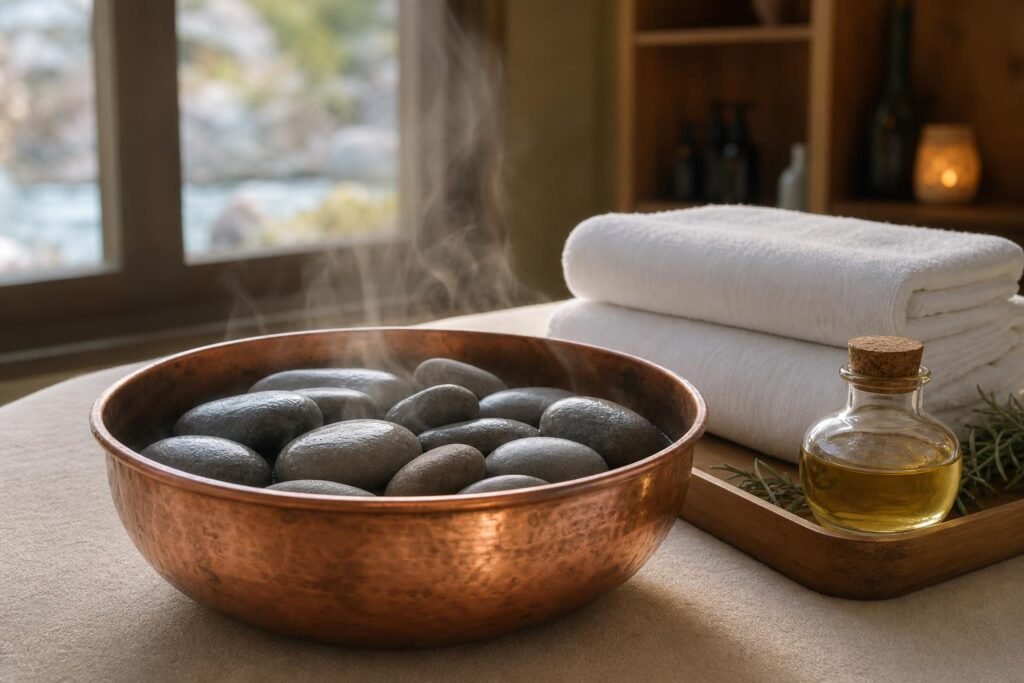
I did the 80-minute hot stone massage last February after a bad day at Bridger Bowl. $165, which is steep but not insane for Montana resort pricing. The therapist—Sharon, mid-50s, had worked there nine years—spent the first ten minutes just on my neck without me asking. You book online or at the front desk; they’ll recommend doing the pools first, massage after, then one more soak. That sequence actually works.
They added a fitness center in 2019 that’s included with soaking admission. Treadmills, a few weights, yoga mats. Honestly, nobody’s here for the ellipticals, but the 7 AM yoga classes (Tuesday/Thursday/Saturday, $12 extra) fill up. Vinyasa style, heated room, instructor named Michelle who doesn’t do the woo-woo voice some yoga people adopt.
The café serves better food than expected—turkey avocado wraps, açai bowls, that kind of thing. I keep getting the bison chili because it’s $9 and you can eat it poolside. They also do smoothies that aren’t just ice and sugar. Beer and wine available, which some people need to relax apparently, though drinking in hot water is a quick way to feel terrible.
Facials and body scrubs happen in the same treatment area as massage. Haven’t tried those. The reflexology option ($75, 50 minutes) got recommended by another guest, older guy from Billings who came monthly and swore it helped his plantar fasciitis.
They rent private soaking tubs by the hour—$45-65 depending on size and time. Holds 2-4 people, completely separate from main pools, you control temperature. Booked solid most weekends but available weekday afternoons. Good if you’re traveling with someone who doesn’t want strangers three feet away while they decompress.
The retail section sells the expected stuff—logo hoodies, Epsom salts, local honey. Also random useful things like reef-safe sunscreen and wool socks, which I’ve definitely forgotten and had to buy at markup.
Making a Weekend of It: Combining Hot Springs with Bozeman Adventures
The best hot springs trips aren’t just about soaking. They’re about earning that soak.
I usually hit Bozeman Hot Springs in the late afternoon, after spending the morning doing something that gets my legs tired and my head clear. The contrast is what makes it work—cold air and exertion, then warm mineral water and stillness.
The Classic Winter Weekend
Start Saturday morning at Bridger Bowl, about 20 minutes north of town. It’s a locals’ mountain—no fancy village, just excellent terrain and powder that stays untracked longer than it should. Ski until 2 PM, grab a burger at the lodge, then drive straight to the hot springs.
Your muscles will be just tired enough. The sauna will feel like exactly what your body was asking for.
Sunday morning, walk around downtown Bozeman before it gets crowded. Hit Cateye Cafe for coffee, browse the bookstores on Main Street, then drive the 30 minutes to the Museum of the Rockies if you’re into dinosaurs or just want to see something beautiful and weird (their planetarium is legitimately impressive).
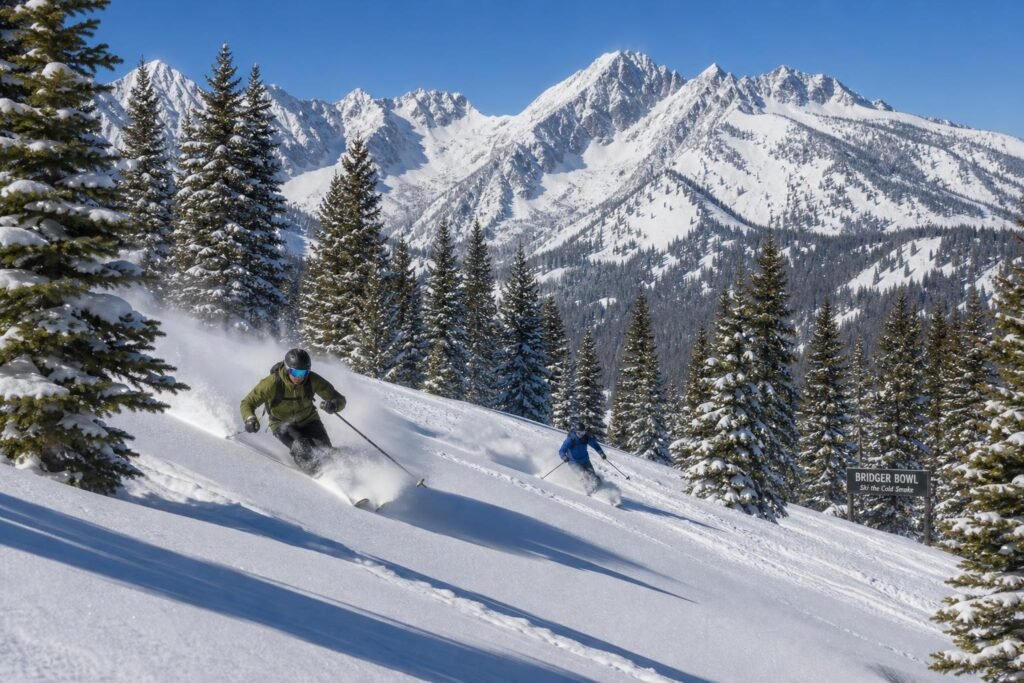
Skiers descending through powder between Douglas firs, Bridger Range peaks sharp against blue sky behind them
The Summer Hiking Option
The Drinking Horse Mountain trail is 20 minutes from the hot springs and climbs about 1,000 feet in two miles. Not brutal, but you’ll feel it. Views at the top look across the Gallatin Valley to the Madison Range.
I like doing this hike first thing Saturday, hitting the hot springs by noon when it’s less crowded, then spending the afternoon in town. Most people here use Alltrails on their phone for trail maps and conditions—I started paying for the Pro version after getting turned around twice on Montana trails where cell service drops out. Worth it if you’re hiking anywhere semi-remote. ↗ AllTrails+
The Hyalite Canyon area is another option, about 30 minutes south. Palisade Falls is an easy half-mile walk to a 80-foot waterfall. Emerald Lake is longer but not technical. Both are high enough elevation that the air feels different—thinner, cleaner.
The Foodie Path
If hiking isn’t your thing, Bozeman’s downtown punches above its weight for restaurants. Plonk is the wine bar everyone recommends and it’s actually good. Open Range has the best meat in town if you want the full Montana experience.
But honestly? Some of my best meals here have been at places like Dad’s Diner (chicken fried steak the size of your face) or the wood-fired pizza at Bridger Brewing, where half the people are still in their ski clothes at 7 PM.
Split a weekend between hot springs sessions—one evening, one morning—and you’ll see the place in completely different moods. Evening is social, busy, golden-hour light on the mountains. Morning is quiet, steam rising in cold air, just you and the early risers.
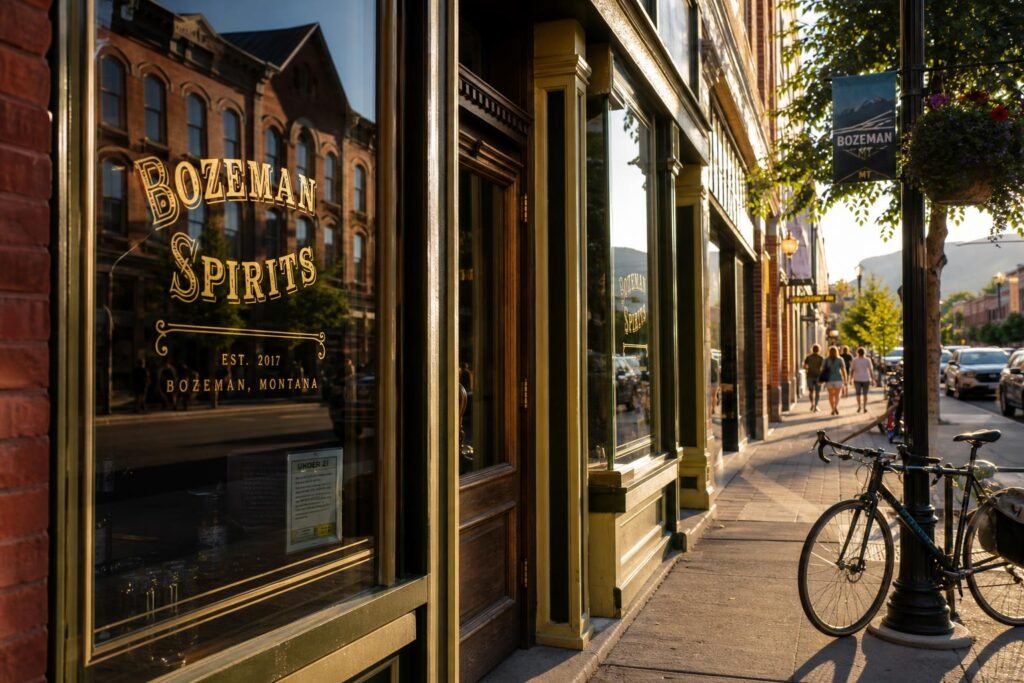
Vintage storefront windows reflecting pedestrians and the brick buildings across the street, a bike leaned against a lamppost
The combination works because neither part is trying too hard. Good simple hiking. Good simple soaking. A town that hasn’t been Aspened-up yet. You leave feeling like you actually rested instead of just filling time between Instagram moments.
Insider Tips for First-Time Visitors
The most useful thing I learned about Bozeman Hot Springs didn’t come from their website—it came from a regular who was there every Tuesday at 7 AM without fail.
Membership Math
If you’re in the area more than four or five times a year, get the membership. It’s $59/month (as of 2024) for unlimited access, versus $14.50 for a single two-hour visit. The break-even is basically four visits.
But the real benefit isn’t financial—it’s that you stop optimizing. You just go. Twenty minutes before dinner? Hot springs. Can’t sleep? Hot springs. Instead of treating it like an Event, it becomes a utility, which is honestly how these places work best.
The Quiet Zones
Most first-timers cluster near the changing rooms in the main pools. The real regulars know the back corner near Pool 9 stays empty even on weekends. The water’s a degree or two cooler but the trade-off is space and silence.
The coldest plunge pool (the small one, not the lap pool) empties out after sunset in winter. If you’re into cold plunging, that’s your window.
Sauna Etiquette Nobody Mentions
Don’t stretch out across the entire bench. Seems obvious, but I’ve watched people do yoga poses in a packed sauna while others stand awkwardly.
The communal nature means sometimes you’ll sit in silence with strangers for 15 minutes and that’s completely fine. Nobody expects conversation. But if someone does start talking, they’re usually local and actually know things worth knowing.
Bring your own towel to sit on. The facility has some but they run out during peak times, and sitting directly on cedar that’s absorbed thousands of butts is a choice I don’t personally make.
Timing the Crowds
Weekday mornings before 10 AM are borderline empty. Sunday nights are surprisingly busy—everyone’s trying to soak away their work-week dread before Monday.
The shoulder season (April-May, September-October) is perfect. Weather’s decent, tourists haven’t arrived or have left, and the locals-to-visitors ratio makes the whole experience feel more authentic.
Money-Saving Moves
The two-hour time limit is loosely enforced if the place isn’t slammed. I’ve gone 2.5 hours on weekday afternoons and nobody cared. Don’t abuse it, but don’t stress if you’re 15 minutes over.
They sell discounted 10-packs that knock about $2 off per visit. Good if you’re in town for an extended stay but not quite ready to commit to membership.
Families: kids under 4 are free. Under 13 is $10. If you have multiple kids, that adds up fast—the membership includes two children, which changes the math considerably for families who plan to go more than once.
What to Actually Bring
Water shoes if you’re picky about walking barefoot where others walk barefoot. The grounds are clean but it’s concrete and tile.
A water bottle. The dehydration sneaks up on you because you’re already wet, so your body’s normal “I’m thirsty” signals get confused.
A lightweight robe or something easy to throw on between pools and sauna. Walking around in a wet swimsuit when it’s 20°F outside gets old fast.
The small locker ($0.25) is plenty unless you’re bringing a full suitcase. I usually just keep wallet and phone in there, leave everything else in the car.
One thing I wish someone had told me the first time: the showers are fine but basic. If you’re particular about your post-soak routine, you might want to just rinse off here and do the full shower at your hotel. Not a dealbreaker, just a reality.