

Health-conscious travelers and history enthusiasts seeking authentic thermal bathing experiences in America’s Spa City.
Hot Springs National Park: America’s Original Spa Destination
I remember driving into Hot Springs for the first time and thinking, wait—this entire national park exists just for bathing? It felt almost decadent. But that’s exactly what makes this place strange and wonderful.
Congress designated Hot Springs as a federal reservation in 1832, decades before Yellowstone became the first official national park. People weren’t coming here to hike or camp. They came to soak in 143-degree water that bubbles up from a mile underground, collecting minerals for over 4,000 years along the way.
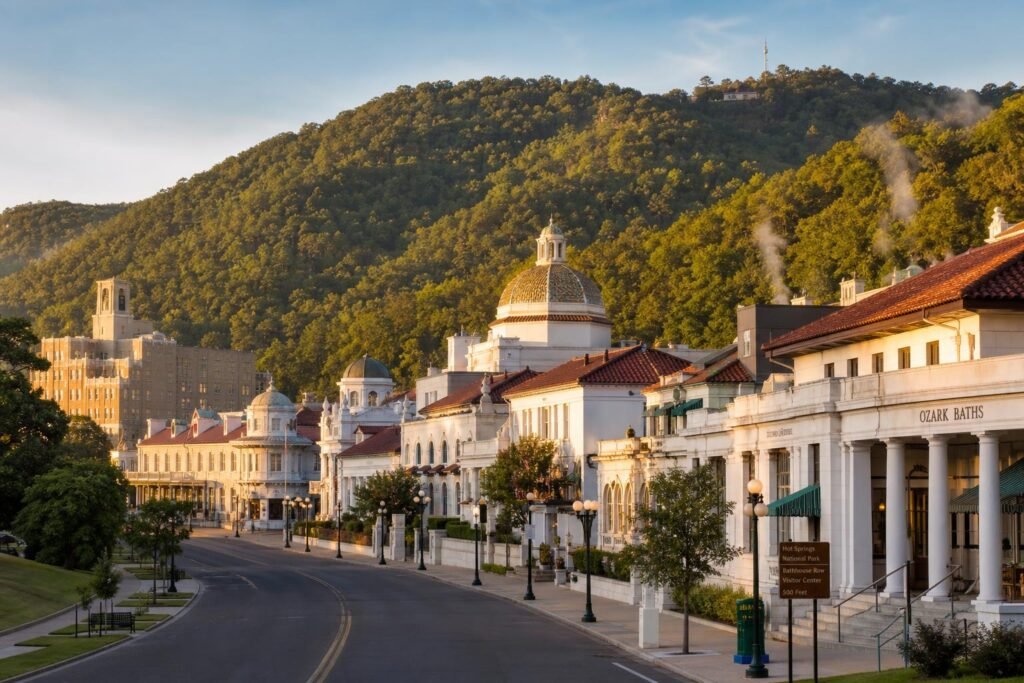
Bathhouse Row’s terra cotta roofs and white columns line Central Avenue with wooded mountains rising behind, steam wisps barely visible from morning vents
The water itself flows from 47 thermal springs on the southwest slope of Hot Springs Mountain, producing about 700,000 gallons daily. It emerges naturally heated—no geothermal power plants or artificial heating needed. And unlike Yellowstone’s acidic pools that’ll dissolve your skin, this water has a neutral pH of 7.5, loaded with silica, calcium, and magnesium bicarbonate.
What shocked me most? The whole downtown smells faintly sulfuric on damp mornings. You’ll see jug fountains where locals fill containers with thermal water, and storm drains releasing steam like some Victorian-era movie set. The park isn’t wilderness—it’s woven right into the city fabric.
The National Park Service manages the springs themselves and ensures water quality, while private operators run the actual bathhouses. It’s a hybrid setup that’s existed for nearly two centuries. Most American spa towns dried up after antibiotics reduced the medical tourism boom of the early 1900s. Hot Springs just kept going.
Historic Bathhouse Row: A Journey Through Time
Eight bathhouses stand shoulder-to-shoulder along Central Avenue, and honestly, the architecture alone is worth the trip even if you never get wet. We’re talking Spanish Renaissance, Italian Renaissance, Neo-Classical—all crammed into three city blocks, built between 1892 and 1923 when thermal bathing was prescribed medicine.
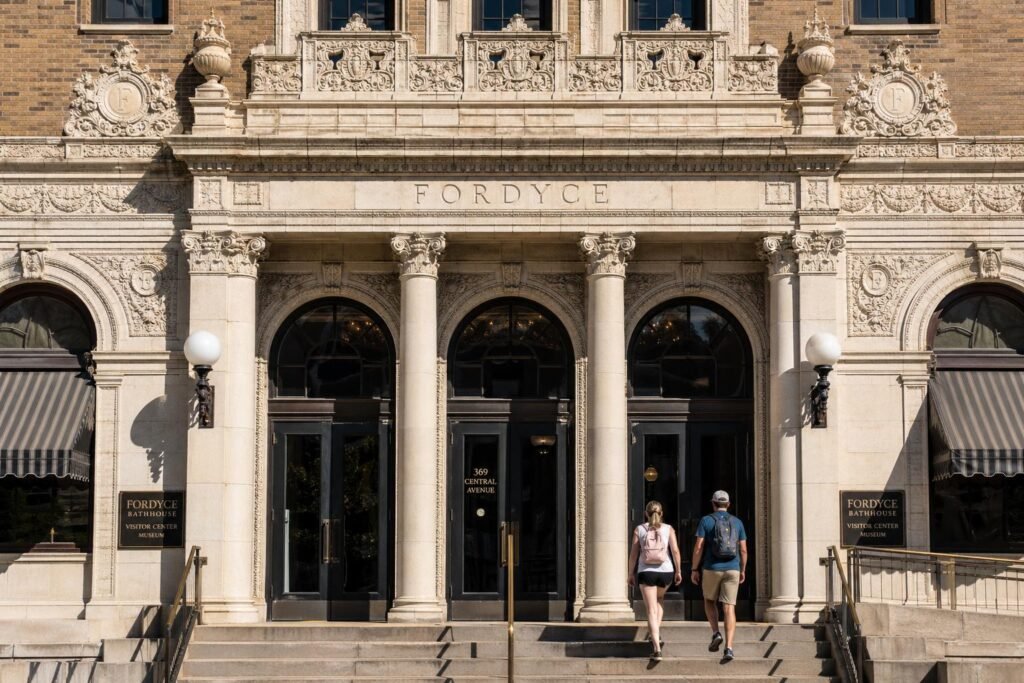
Ornate terra cotta detailing and arched windows catch sharp shadows, with “Fordyce” carved in stone above columns, tourist couple ascending front steps with backpacks
The Fordyce is now the park’s visitor center, which feels slightly criminal since it’s the most elaborate of them all. I spent an hour wandering its three floors—stained glass skylights, marble fountains, separate “Ladies’ Entrance” vestibules. The basement hydrotherapy department looks like a medieval torture chamber repurposed for wellness. Somehow that’s exactly the vibe.
Only two bathhouses still operate for traditional thermal bathing: Buckstaff and Quapaw. Buckstaff opened in 1912 and basically hasn’t changed the process since. No appointments—you show up, they assign you a attendant, and you go through the full ritual. Thermal sitz bath, hot packs, needle shower, steam cabinet. It’s old-school and a little awkward if you’re shy about near-nudity with strangers.
Quapaw reopened in 2008 after decades of abandonment, and they went the opposite direction—modern communal pools under the original Spanish Colonial dome. Four thermal pools at different temperatures, plus cold plunges. I ended up going with Quapaw because I wanted to soak for an hour, not get power-hosed by a bath attendant in 20 minutes. Most people under 60 make the same call. ↗ Viator Hot Springs Bathhouse Tour
The other six bathhouses? Superior and Maurice are modern spas with thermal water (massages, facials, the works). Lamar and Hale are commercial spaces. Ozark is abandoned, slowly being restored. And the Fordyce, like I said, is a museum—free admission, and absolutely the place to start.
You can walk the entire row in ten minutes. But the contrast between beaux-arts excess and thermal spring pragmatism—that takes longer to absorb. These buildings were constructed when doctors genuinely believed bathing here cured arthritis, syphilis, and paralysis. The architecture reflects that medical authority. Now we come mostly because hot water feels good and the buildings are stunning. Simpler times.
The Traditional Thermal Bath Experience: What to Expect
I’m not going to lie—my first thermal bath felt a bit clinical. You’re not just hopping into a pretty pool. The traditional experience at Hot Springs follows a routine developed over a century ago, and they stick to it.
You start in the thermal tub. Eight to ten minutes in 98-102°F spring water that’s been cooled down from its natural 143°F. The attendant will check on you because some people get lightheaded. I watched the clock more than I expected to.
Next comes the sitz bath—a smaller, hotter tub where you sit while they spray your back and shoulders. Then the vapor cabinet, which is exactly what it sounds like. Your head sticks out the top while steam from the springs surrounds your body. I looked ridiculous. It worked.
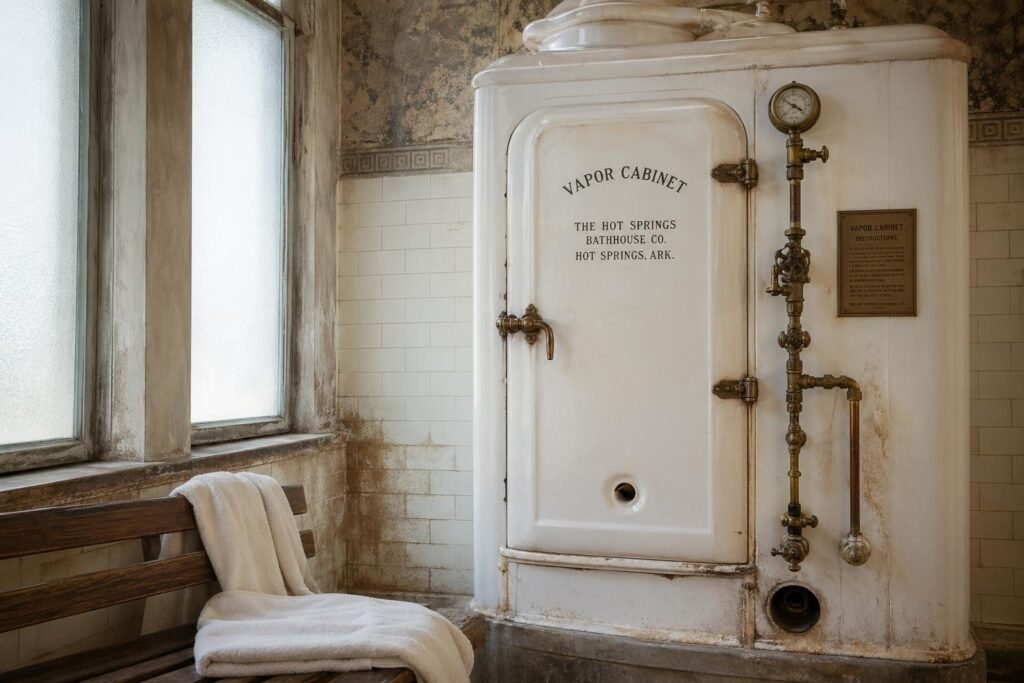
Vintage white porcelain steam cabinet with brass fixtures, towels draped on wooden bench, tile walls showing decades of mineral deposits
The needle shower follows—multiple jets hitting you from all sides, alternating temperatures. After that, you’re wrapped tight in hot linens like a burrito and left to rest on a table for 20 minutes. This part, honestly, is where the magic happens. Your muscles have no choice but to let go.
The whole process takes about an hour. You’ll drink more water than you think you need—the attendants push hydration hard because the heat pulls everything out of you.
The spring water itself contains dissolved minerals: calcium, magnesium, bicarbonate, silica. The bathhouses claim benefits for arthritis, circulation, and muscle recovery. The National Park Service is careful not to make medical claims, but people have been coming here since the 1830s for relief, and many still swear by it. I left feeling loose in a way that a regular hot tub doesn’t touch.
Traditional baths run $35-45 depending on the bathhouse. You can add a massage for another $65-95.
Best Bathhouses for Your First Visit
You’ve got two solid choices for that classic experience: Buckstaff and Quapaw. They’re almost next door to each other on Bathhouse Row, but the vibe couldn’t be more different.
Buckstaff Bathhouse is the only one that’s operated continuously since 1912. No appointments, cash only, no frills. You show up, put your name on the list, and wait in the small lobby with its creaky wooden benches. Men and women have separate facilities—fully separate, traditional, a bit old-school in ways some people love and others find dated.
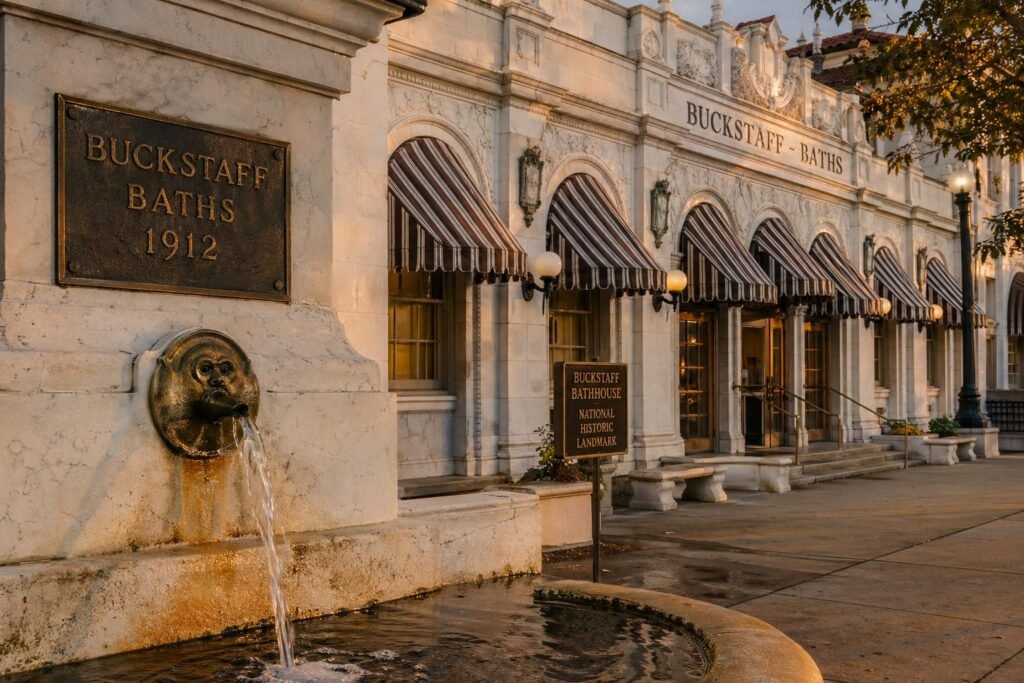
Spanish Renaissance facade with original 1912 signage, striped awnings, thermal spring water flowing from brass spout into sidewalk fountain
The attendants have worked there for decades. They know the 20-step routine by heart and they’ll walk you through it, but don’t expect a spa menu or aromatherapy options. A traditional bath costs $37. A bath with massage runs $97. You’re in and out in 90 minutes. It feels like stepping into 1952, which is the entire point.
Quapaw Baths & Spa reopened in 2008 after sitting empty for decades, and they went modern. Co-ed pools, multiple temperatures, a social atmosphere. Four outdoor pools ranging from 98°F to 104°F, plus hot and cold plunge pools inside. You can soak as long as you want—people spend hours here.
The traditional bath services exist at Quapaw ($85), but most first-timers go for the pool experience instead. A two-hour soak pass costs $35 weekdays, $40 weekends. The Sunday morning crowd skews local—families, older couples who’ve been coming for years. It’s less reverent, more relaxed.
I ended up using Quapaw for my first visit because I wanted to control my own pace, and the co-ed setup meant my partner and I could actually talk about what we were experiencing. ↗ If you want to see multiple bathhouses without committing to full treatments, several local guides do walking tours that include the history and architecture of the entire row, plus time to soak.
For purists and history buffs: Buckstaff. For people who want a contemporary spa day with historic water: Quapaw. Both are worth it, just know what you’re signing up for.
Modern Spa Services Meet Historic Waters
The bathhouses aren’t stuck in 1915, even if their tile work is.
Most of the operational houses now offer the full menu of modern spa treatments—Swedish massage, deep tissue, hot stone, aromatherapy facials, body wraps. The difference is they’re using the thermal mineral water that’s been flowing here since before anyone thought to bottle it and charge $8.
At Quapaw, I watched them prep a hot stone massage where the stones themselves had been heated in the thermal water. Small touch, but it matters when you’re trying to feel like you didn’t just drive to a strip mall spa. They do couples’ massages in side-by-side rooms with oversized soaking tubs—you alternate between massage table and private thermal bath.
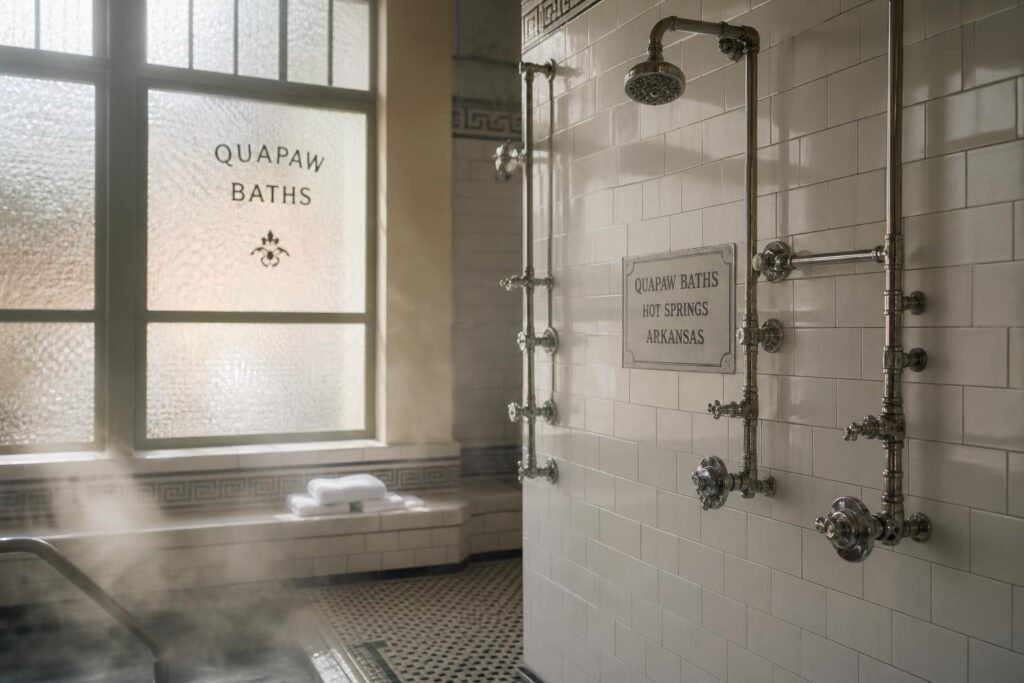
Vintage chrome shower fixtures and white subway tile walls in a historic bathhouse, steam rising from an off-frame thermal pool
Buckstaff has added facials and body treatments but keeps them deliberately old-school. No jade rollers or CBD-infused anything. Their thermal water facial is exactly that—hot compresses soaked in 143-degree spring water, clay mask, basic moisturizer. Sometimes less fussy is better.
The Arlington Hotel spa is where things get properly modern. They’ve got a full resort setup—thermal mineral baths, yes, but also a eucalyptus steam room, cold plunge pools, and treatment rooms that look like they were designed this decade. I ended up booking a package there because they let you build your own combination. ↗ Hot Springs Spa Package
Some places have started doing thermal water pedicures, which sounds gimmicky until you realize your feet are soaking in genuine mineral water instead of tap water someone dumped Epsom salts into. It’s the kind of detail that separates the tourist trap version of this town from the real thing.
The whirlpool mineral baths at Quapaw are particularly good if regular soaking tubs feel too still. You’re essentially in a hot tub, except the water is coming up from a 4,000-year-old aquifer instead of being recycled through a filter that twelve people used before you.
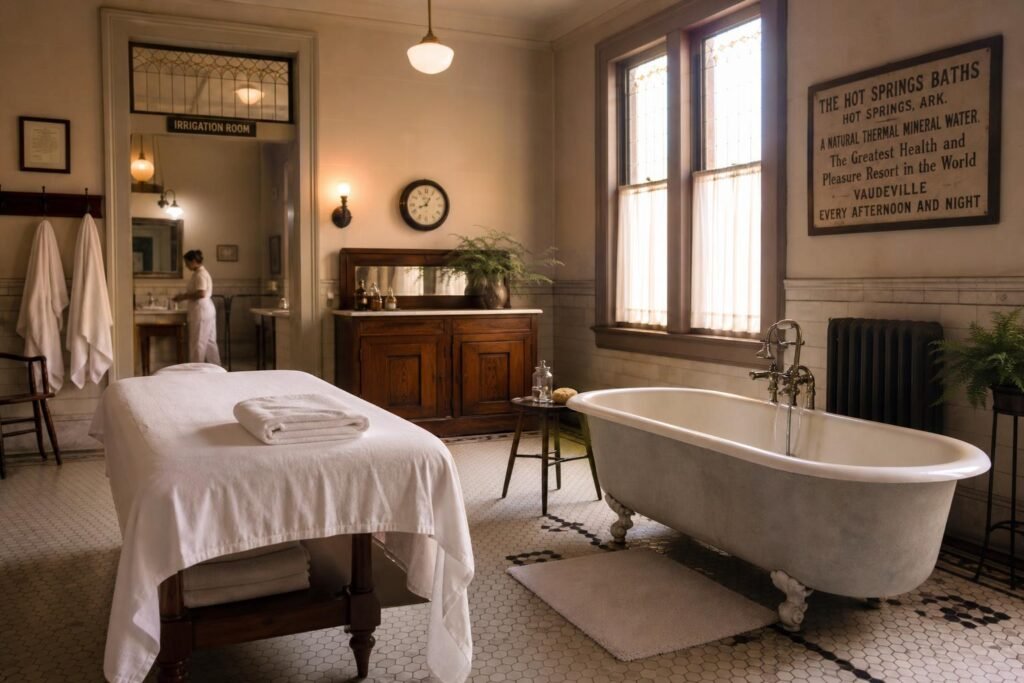
Massage table with folded white linens next to a freestanding clawfoot thermal soaking tub, attendant in white uniform barely visible in background
Most spas here will build packages—massage plus soak plus steam, that kind of thing. If you’re doing multiple treatments, packages usually save you $30-50 compared to booking separately. And unlike resort spas in places like Scottsdale or Palm Springs, you’re not paying a premium just because they put the word “thermal” in front of everything.
Planning Your Bathhouse Day: Reservations, Timing, and Etiquette
Book ahead. I can’t stress this enough.
The operational bathhouses aren’t huge—Buckstaff has maybe a dozen tubs total, Quapaw slightly more. Weekends fill up fast, especially October through April when people actually want to sit in hot water. I’ve seen walk-ins get turned away at 10 a.m. on a Saturday.
Two weeks out is safe for weekdays. A month for weekends. Holidays, especially around Thanksgiving and Christmas, book solid sometimes six weeks in advance.
Best time to go is mid-morning on a weekday. The 9 a.m. crowd has cleared out, the lunch rush hasn’t hit, and you’re not fighting retirees who’ve claimed the 7 a.m. slots like it’s their religion. Tuesdays and Wednesdays are quietest.
What to bring: not much. They provide robes, towels, slippers at the full-service places. I’d bring a hair tie if you have long hair—you will get wet even if you’re trying not to. A water bottle is smart because you’ll sweat more than you expect. Flip-flops if you’re weird about wearing house slippers, though theirs are always clean.
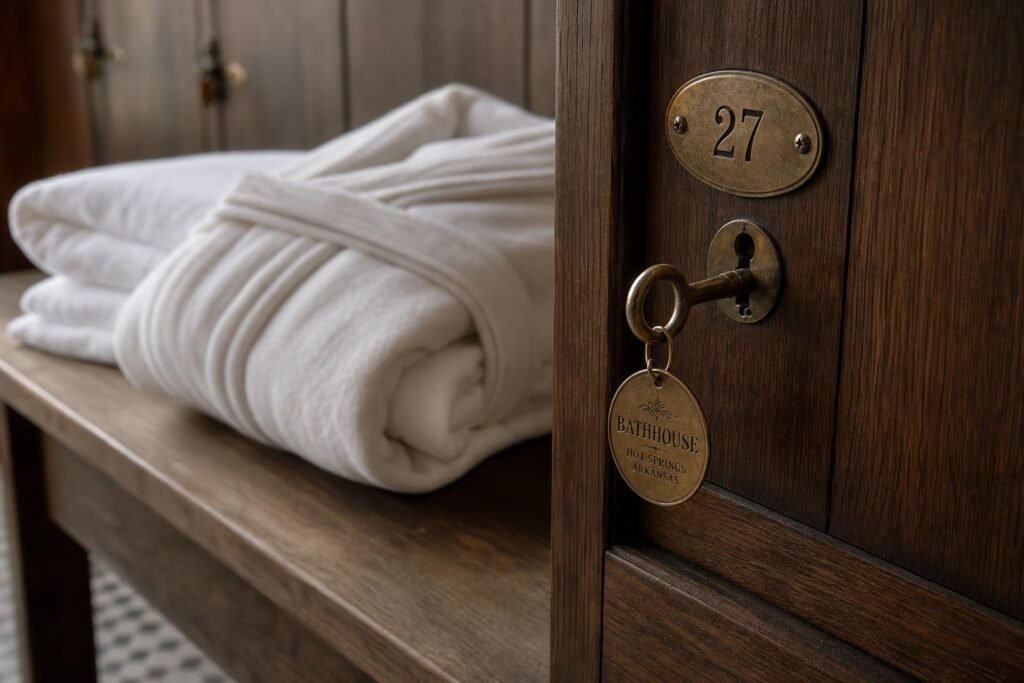
Wooden locker with brass number plate and vintage key, folded white robe and towels stacked on nearby bench
Leave your jewelry and watch in the car. The thermal water won’t ruin them, but the steam rooms and whirlpools will make you paranoid about losing a ring down a drain.
Etiquette is straightforward. This isn’t a chatty social spa experience—it’s closer to a doctor’s appointment where everyone’s half-naked and trying to relax. Keep your voice low in the bathing areas. Don’t bring your phone into the actual bath rooms (some places ban them outright). If you’re in a communal soaking area, give people space.
The traditional bathhouse experience is same-gender bathing with attendants who are very much in charge of the process. You do what they say, when they say it. It’s not rude—it’s just how it works. They’ve done this 10,000 times and you haven’t.
Shower before getting in any communal bath. Yes, even though you showered at your hotel. It’s the rule and people will give you looks if you skip it.
Timing your treatments: the traditional bath is 20-30 minutes depending on package. Massages run 50-80 minutes. If you’re booking both, build in at least 15 minutes between. You’ll need time to dry off, get re-robed, and walk to the next room. Rushing between a thermal soak and a massage just means you’ll spend half the massage tense.
Most people do bath first, then massage. The heat loosens everything up. But some prefer massage first, then a long soak after to let the muscles stay warm. Either way works—just don’t do two thermal treatments back-to-back unless you enjoy feeling like overcooked pasta.
If you start feeling lightheaded in the bath, get out. The water is hot enough to mess with people, especially if you’re not hydrated. The attendants watch for this, but speak up if you feel weird.
Beyond the Baths: Hot Springs Activities and Attractions
You can’t soak for twelve hours straight. Trust me, I tried once and my skin looked like a prune for days.
Hot Springs National Park wraps around the entire town, which means you’re basically staying inside a national park. The Grand Promenade is a half-mile brick walkway behind Bathhouse Row that connects to several trails. It’s gorgeous at sunset when the light hits the fordite and brick.
For actual hiking, the Sunset Trail is 10 miles of moderate terrain with legitimate views over the Ouachita Mountains. I did the shorter North Mountain Loop instead—about 2 miles, starts right behind the visitor center. You’ll pass through the Hot Water Cascade where thermal water flows down the mountain. The rocks are actually warm to touch.
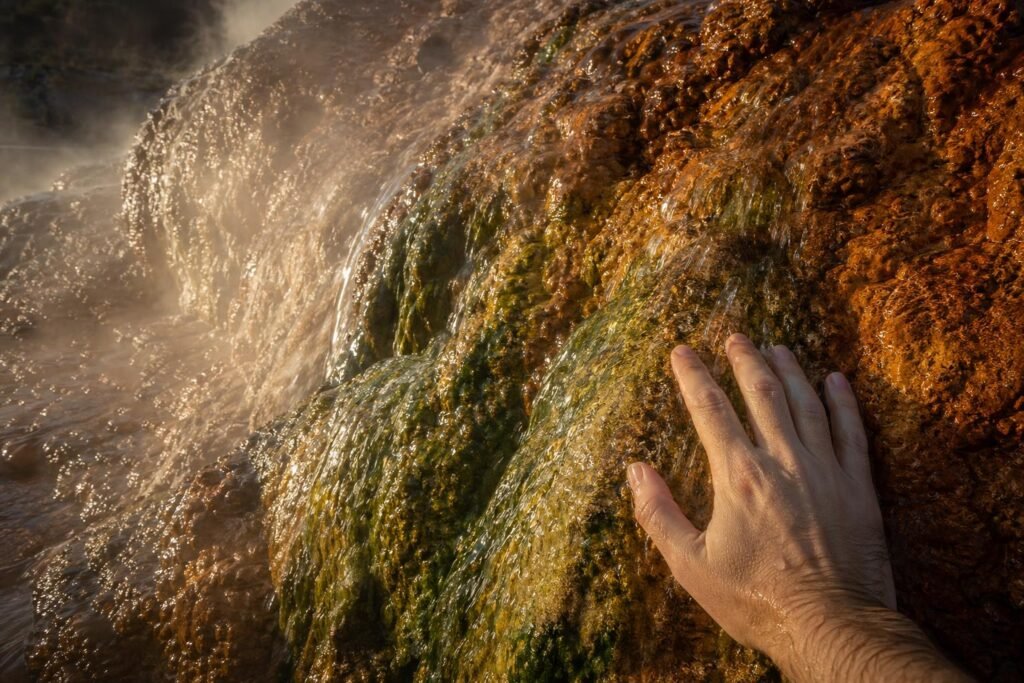
Thermal water flowing over rust-orange and moss-covered rocks with visible steam rising, one hand touching the warm stone surface
Lake Hamilton is 15 minutes south and feels like a different world. It’s where locals actually go—pontoon rentals, fishing, waterfront restaurants that aren’t trying to be something they’re not. Belle of Hot Springs is a paddle wheeler that does dinner cruises if that’s your thing. I just got tacos at Fisherman’s Wharf and watched the sun drop behind the pine trees.
Downtown Hot Springs is walkable and weird in the best way. You’ve got the Ohio Club, Arkansas’s oldest bar, where Al Capone supposedly played cards in the back room. The Wax Museum is delightfully dated. Superior Bathhouse Brewery is the only brewery inside a national park—they brew with thermal spring water, and yes, you can taste the mineral difference in their IPA.
Hot Springs Mountain Tower charges $9 to go up 216 feet. The elevator is from 1983 and makes concerning sounds, but the 360-degree views are legitimately worth it. You can see where the city grid ends and the forest just takes over. Go an hour before sunset.
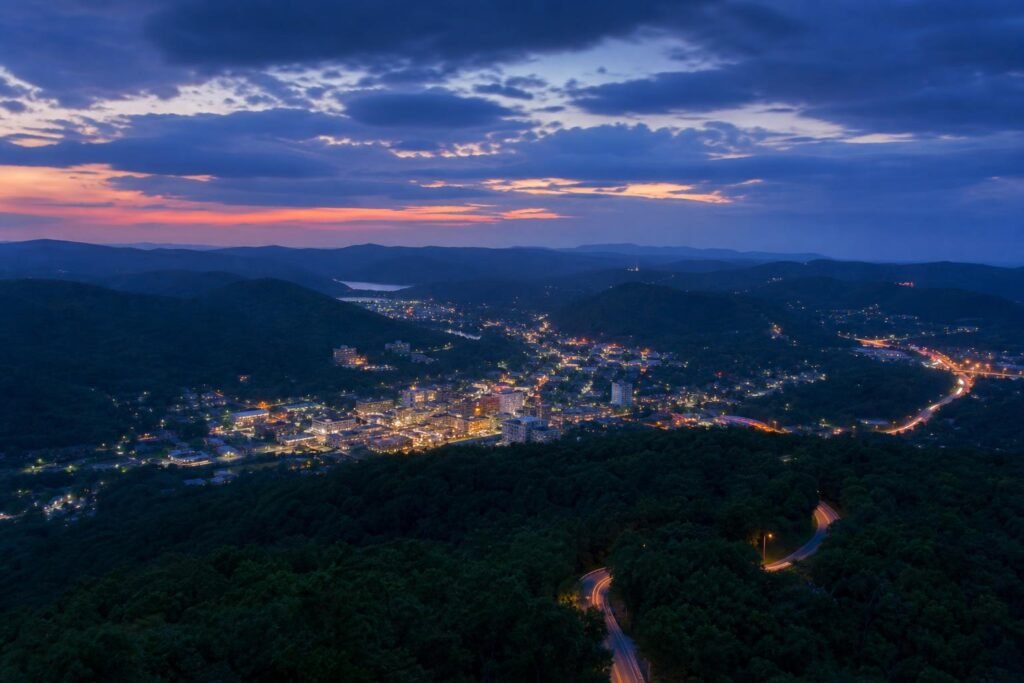
Panoramic view of downtown Hot Springs lights beginning to glow against dark green forested mountains, winding roads disappearing into valleys
If you’re here on a weekend, the Hot Springs Farmers Market sets up Saturday mornings behind the Wax Museum. I bought the best peach preserves I’ve ever had from a woman who’s been making them for forty years. That jar lasted three days.
Where to Stay for the Ultimate Hot Springs Spa Retreat
The Arlington Resort Hotel sits directly on Bathhouse Row and pumps thermal water into their own spa and certain room taps. Rooms start around $129 weeknights, more on weekends. It’s massive—484 rooms—and feels like a 1920s grand hotel because it basically is. The twin towers, the columned facade, the lobby with its painted ceiling. Some rooms are dated, but that’s part of it.
I stayed there specifically because I wanted thermal water in my actual bathtub at 11 PM. Room 447 had a soaking tub, and yes, I filled it with hot spring water and it was exactly as good as it sounds. The spa downstairs offers packages with overnight stays—couples massages plus two nights start around $400 depending on season.
For something more intimate, Waters Hotel is adults-only, 14 rooms, built in 1908 and renovated to boutique standards. Rates run $150-250. It’s quieter, more European in feel. No in-house spa, but you’re a three-minute walk from Quapaw.
If you want full resort amenities, The Lodge at Gulf Mountain is 20 minutes outside town on 350 acres. Pool, trails, decent restaurant. Rooms are modern and generic but comfortable. Around $140-180. Most people staying here use it as a base for hiking and doing bathhouse day trips.
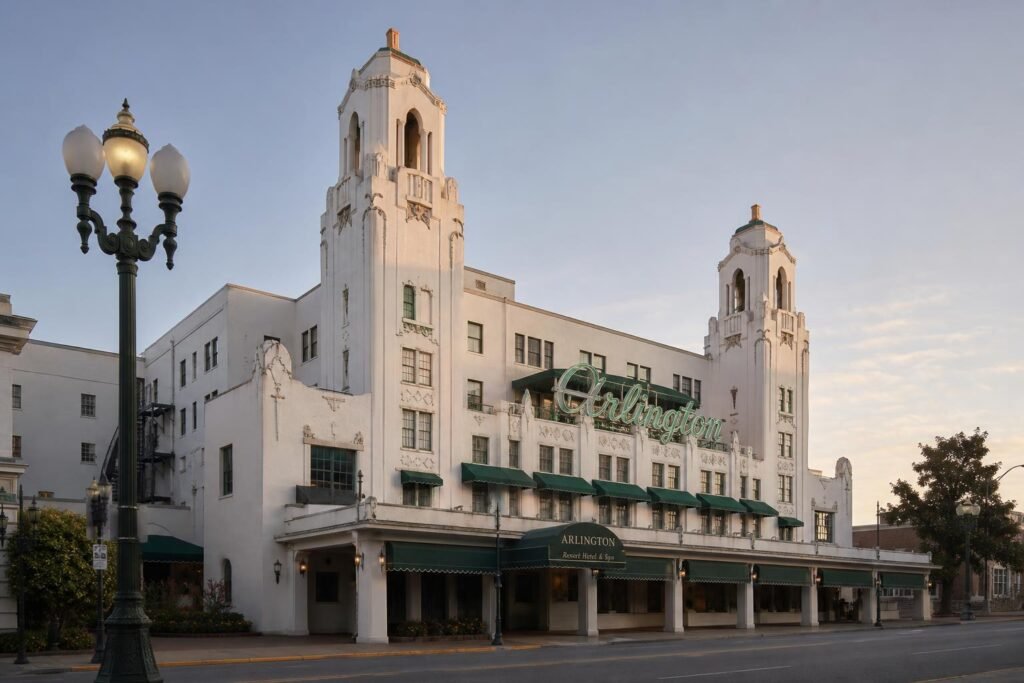
Art Deco twin towers with white facade and green awnings, vintage neon sign reading “Arlington,” empty street with period lampposts in foreground
Budget option: Quality Inn near Lake Hamilton goes for $75-90 and is perfectly fine if you’re just sleeping there. Twenty-minute drive to Bathhouse Row.
For a proper spa retreat, I’d do three days minimum. Day one: arrive, light hike on North Mountain, sunset soak at Quapaw. Day two: morning traditional bath at Buckstaff, lunch downtown, afternoon at Superior Brewery, evening couples massage. Day three: sleep in, long breakfast, one more quick thermal soak, drive home relaxed.
Most people here book their main bathhouse experience through packages that bundle accommodations with treatments. I ended up using a Hot Springs spa package deal that included two nights at The Arlington plus a couples massage and thermal bath session—worked out cheaper than booking separately, and they coordinate everything so you’re not managing five different reservations.
Four days is better if you want to actually read a book by the pool and not feel rushed. A week is when locals start asking if you’re moving here.
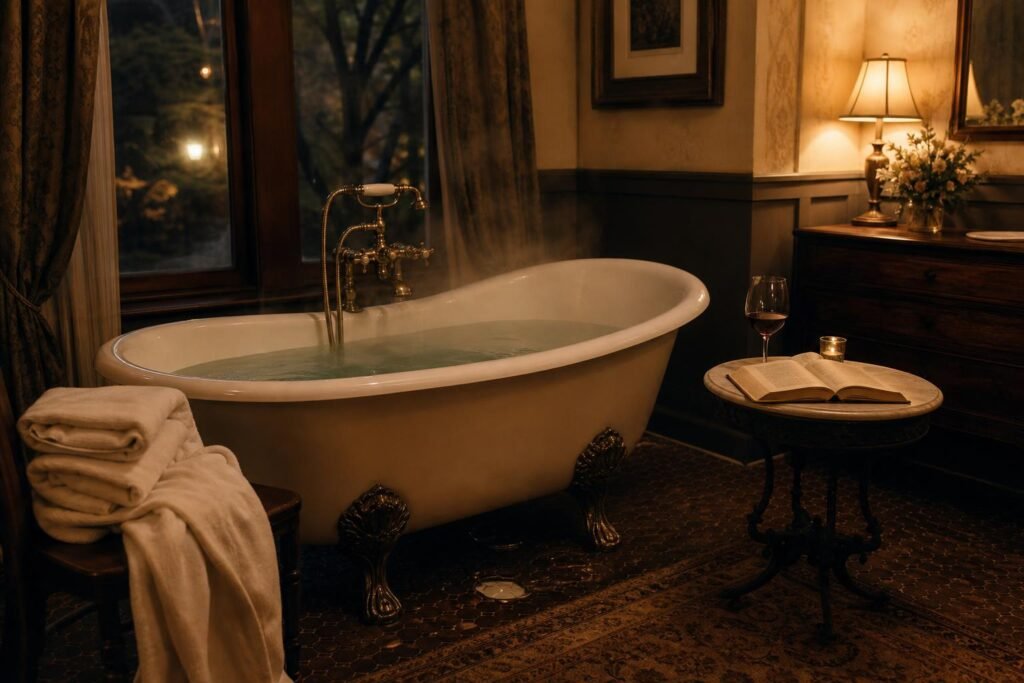
Book bathhouse appointments before you book your hotel. Seriously. Buckstaff and Quapaw fill up weeks ahead in spring and fall. Then find a place to stay within walking distance because the last thing you want after a thermal bath is a 15-minute drive.