

Families and adventure seekers planning a summer river tubing trip to Lava Hot Springs, Idaho.
Why Lava Hot Springs Is Idaho’s Tubing Paradise
Most people hit Lava Hot Springs for the hot pools. Which makes sense—natural geothermal water at 112°F after a day of hiking. But the real move is tubing the Portneuf River first, then soaking after.
The river runs right through town. Class I rapids, which means fun bumps and splashes without anyone flipping over or losing their sunglasses. Water temps sit around 65-70°F in summer—cold enough to feel refreshing, warm enough that kids aren’t miserable after twenty minutes.
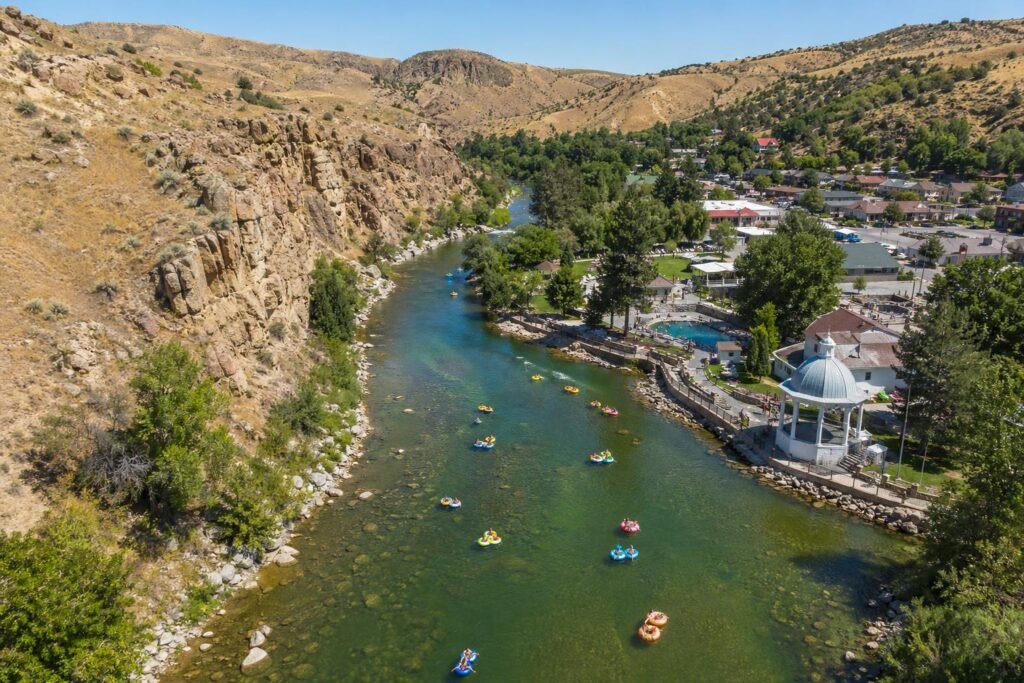
The jade-green river winding between tan cliffs with a dozen colorful tubes scattered across the water and the white gazebo of the hot springs complex visible on the bank
What I didn’t expect: the scenery. You’re floating between red rock cliffs with ponderosa pines, not staring at the back of a strip mall. The whole run is about 45 minutes to an hour depending on water flow, which means it’s long enough to feel like an actual activity but short enough to do twice if your kids are into it.
The combination is what works. Tube down in the afternoon when it’s hot, then walk across the street to the hot springs complex. Your legs are tired from bracing in the rapids, the hot water feels earned, and you’re not spending six hours in a car to make it happen.
Where to Rent Tubes: Local Shops and What They Offer
Three main spots rent tubes in Lava. I’ve used all of them.
Lava Tubing sits right at the put-in on Main Street. Single tubes run $10, double tubes $15, and they’ve got mesh-bottom cooler tubes for $8 if you’re bringing drinks. They shuttle you back from the take-out for free, which matters because walking a mile uphill in wet sandals with a tube under your arm is nobody’s idea of fun. Open 10am-6pm daily Memorial Day through Labor Day.
Riverside Inn & Hot Springs rents tubes if you’re staying there—$8 for guests, $12 for non-guests. Fewer tube options, but you’re already on property. I ended up booking through Booking.com for a two-night trip last July because they had a deal that dropped the room rate low enough that the tube discount basically paid for itself.
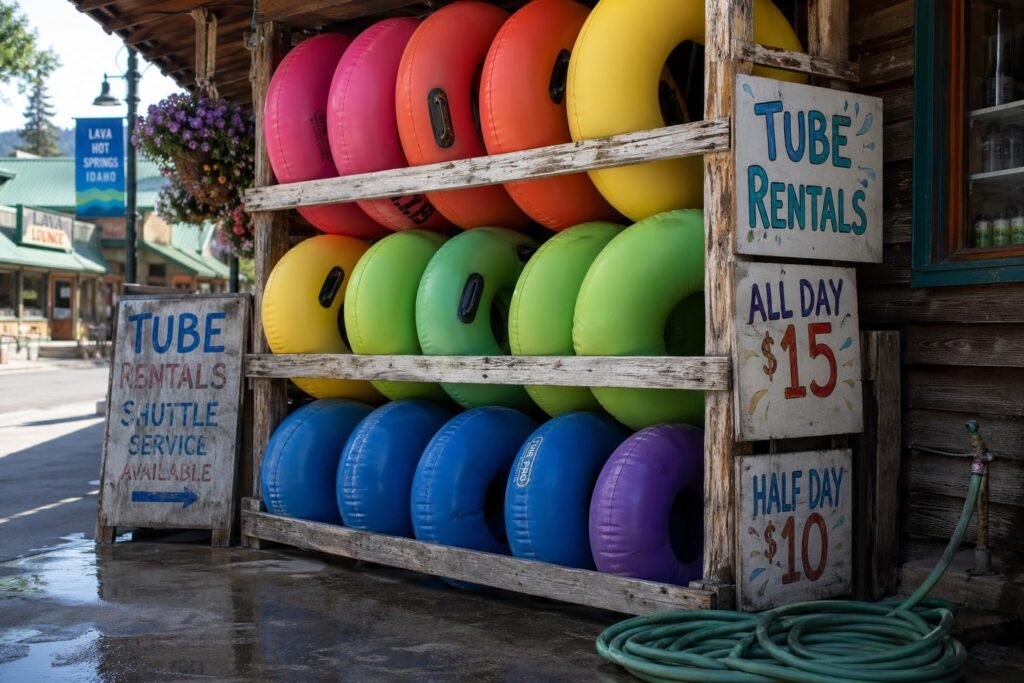
A weathered wooden rack stacked with rainbow-colored inner tubes, price signs hand-painted on plywood, a garden hose coiled on the ground for rinsing off
Lava Hot Springs KOA does rentals too—same pricing as Lava Tubing, but it’s a half-mile walk to the river. Fine if you’re camping there anyway, annoying if you’re just driving in for the day.
What you actually need: one tube per person. The double tubes sound romantic until you realize steering is impossible and you’ll spend the entire float spinning backward. Kids under 40 pounds should share with an adult—the current’s gentle but consistent.
Cooler tubes are worth it if you’re going down more than once. We brought seltzers and string cheese, which sounds ridiculous but tastes perfect when you’ve been in the sun for an hour. Most shops require a $20 cash deposit per tube, returned when you bring them back. Nobody takes Venmo for deposits. Bring actual cash.
The Best Tubing Routes: From Beginner to Adventurous
The Portneuf River through Lava Hot Springs isn’t one of those rivers where you just hop in anywhere. There are three main put-in points, and each gives you a completely different experience.
Most families start at the bridge near 2nd East Street. This is the mellow float—about 45 minutes to an hour depending on water levels, which peak in June and early July. You’ll drift past cottonwoods and a few gentle ripples, nothing that’ll flip a tube. The takeout is right by Riverside Park, where there are bathrooms and a snack shack that sells surprisingly good soft-serve.
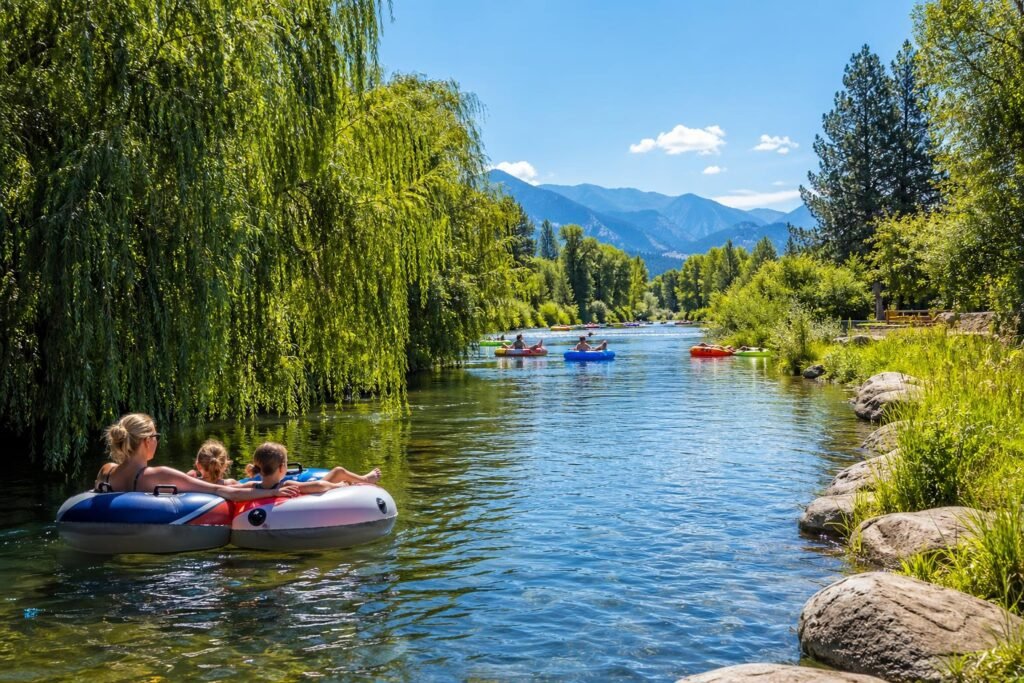
Families in colorful tubes drifting past overhanging willows, the river wide and glassy, mountains blue in the distance
If you want a bit more action, put in farther upstream at the Dempsey Creek access. This adds another 30-40 minutes and includes a couple of Class I rapids—really just faster water over rocks. Kids above eight or nine handle it fine, but you will get splashed. I saw a dad lose his sunglasses here last summer, so hang onto your stuff.
The thrill-seeker route starts way up at Tin Can Flat Road. This stretch has Class II rapids with names like “Ledges” and “Sluice Box.” You’re looking at two-plus hours, some actual whitewater, and spots where you’ll need to paddle or kick to stay off rocks. Most rental places won’t even let you take their tubes up here—you need sturdier rafts. But if you’ve got older teens who think the main float is boring, this is your move.
Water levels matter more than most people realize. In late July and August, parts of the upper routes get rocky and shallow. You’ll be scraping bottom. Early summer is prime—fast enough to be fun, deep enough that you’re not dragging.
What to Bring: Essential Gear for a Perfect Tubing Day
Water shoes are non-negotiable. The riverbed is all smooth rocks and the occasional broken glass from decades of beer cans. I learned this the hard way my first trip—walked barefoot to the put-in and stepped on something sharp within five minutes. Decent water shoes with actual soles run about $25 at the Fred Meyer in Pocatello, or $35 at the shops in town if you forget.
Sunscreen, obviously. But here’s what nobody tells you: spray sunscreen washes off in about twenty minutes on the water. Get the sport stick kind for your face and shoulders, reapply at the put-in, and accept that you’re probably getting some color anyway. The sun bounces off that water hard at 5,000 feet elevation.
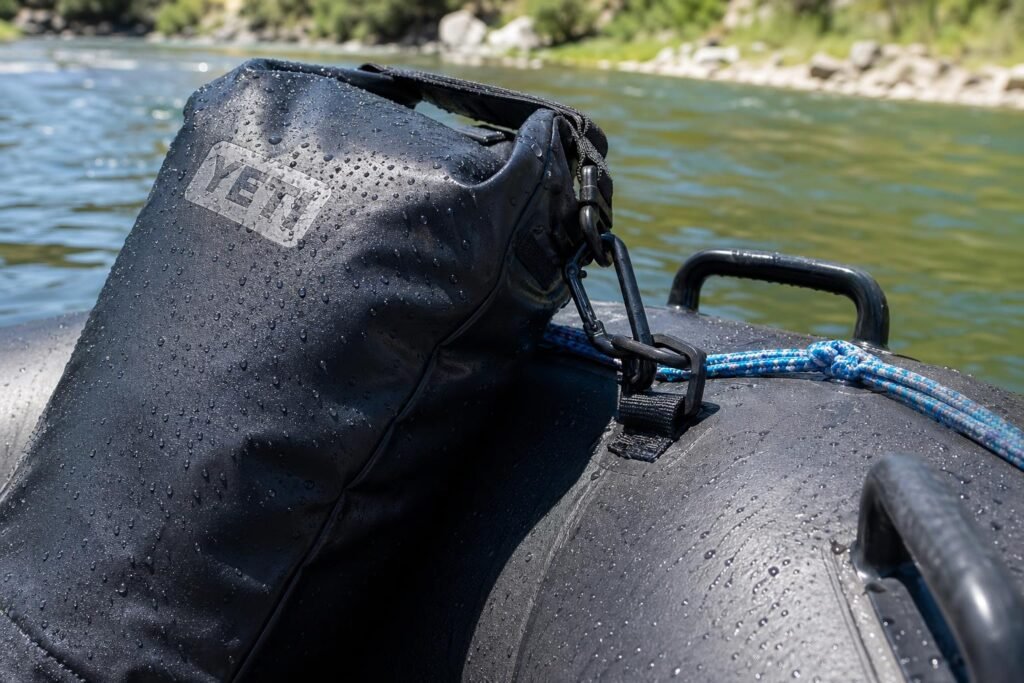
A waterproof bag clipped to an inner tube, river water beading on its surface, tube handles and rope visible
For phones and keys, a proper waterproof pouch is essential. Those cheap plastic baggies from the grocery store will leak. Most people here use the ones that hang around your neck—they run about fifteen bucks and actually work. Or honestly, just leave your phone in the car. There’s something freeing about two hours where nobody can reach you.
Bring snacks that won’t turn to mush. Granola bars, trail mix, those little pouches of applesauce. A small soft cooler can clip to your tube if you really want cold drinks, but most people just grab something at the halfway point where you can beach the tubes for a minute. The Portneuf moves slow enough in most sections that you can eat while floating.
What to leave behind: valuables you actually care about. Cash and cards should stay in your car or hotel room. That “waterproof” watch probably isn’t river-proof. And no glass anything—cans only, though personally I just stick with water until we’re done.
One thing I ended up using last year was a dry bag with actual sealed seams ↗ name. Not the roll-top camping kind, but the ones made for paddling. Cost more upfront, but after watching three phones die in cheap cases during one trip, it seemed worth it. Clips right to the tube handle and I’ve dunked it probably fifty times with zero issues.
Most rental places provide a rope to tie tubes together, which is clutch if you’ve got little kids. Nothing worse than watching a four-year-old drift away downstream while you’re stuck in an eddy.
Safety Tips and River Etiquette
Look, the Portneuf River isn’t whitewater rapids, but it’s still a real river with rocks, currents, and enough variables to require some common sense.
Water levels change everything. Early summer when snowmelt is pumping through? You’re moving fast, the water’s higher, and you need to stay alert. By August, it’s mellower but shallower—which means more opportunities to scrape your backside on rocks. Check current conditions at any rental shop before you go. They’ll tell you straight up if it’s a lazy float day or if you should keep your kids closer.
Most rental companies don’t allow alcohol on the river, and honestly, it makes sense. I’ve seen too many sunburned groups lose track of time, get separated, and turn what should be a fun afternoon into a logistics nightmare. Save the beer for after. The river’s not going anywhere.
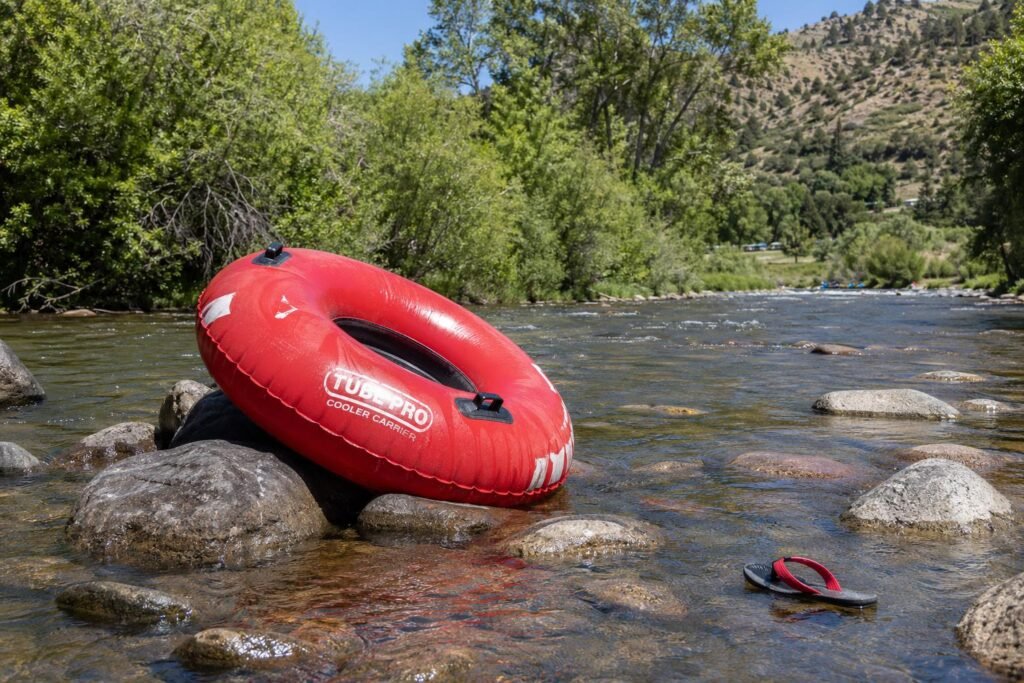
A red inner tube caught sideways on smooth river rocks in shallow water, one flip-flop floating nearby
Life jackets aren’t legally required for tubers over 12, but if your kids are younger or not strong swimmers, get them. The shops have them. Nobody’s going to judge you for being the responsible parent—they’ll judge you for the alternative.
River etiquette is mostly about not being oblivious. Don’t block narrow sections while you’re trying to untangle your linked tubes. If someone’s moving faster, let them pass. And this matters: respect the private property along the banks. Some stretches run through people’s backyards. They tolerate tubers because it’s part of living on the river, but crashing their lawn for a picnic or leaving trash isn’t cool.
Groups of six or more? Designate someone to sweep the back. Little kids drift slower, tubes deflate, people stop to adjust sunglasses—you don’t want to realize someone’s missing when you’re already at the takeout.
Combining Tubing with Hot Springs Soaking
Here’s the move that turns a good day into the kind of day your family talks about all winter: tube in the afternoon, soak in the evening.
The hot springs are why this town exists in the first place. Natural mineral water bubbling up at around 110°F, and unlike a lot of hot springs destinations where you’re driving to some remote pool, these are right in town. You finish your float, walk two blocks, and you’re submerged in therapeutic warmth while your muscles remember what relaxation feels like.
Timing matters. The river is best from about 11 AM to 4 PM—water’s warmest, sun’s high, and you’ve got plenty of daylight even if your float takes longer than expected. The hot springs pools are open until 10 or 11 PM most nights. So you’re not rushing. Tube, grab an early dinner at one of the cafes on Main Street, then hit the pools around 6 or 7 PM when the day-trippers have cleared out.
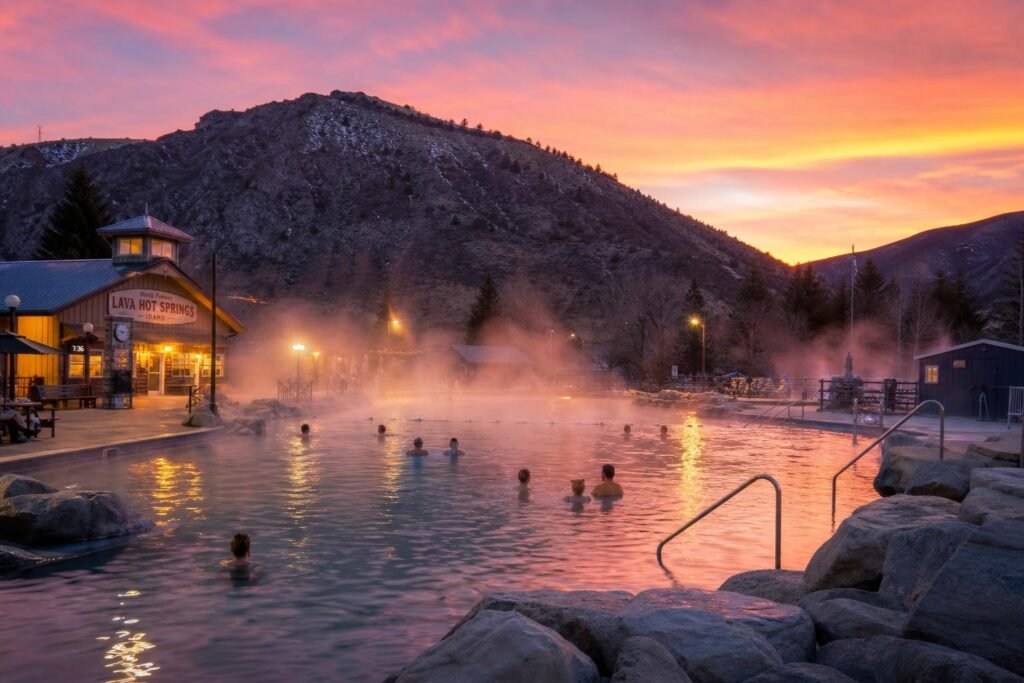
Outdoor hot springs pool with steam rising into pink-orange sky, a few people waist-deep in water, mountain ridge visible behind
There are a few options for soaking. The Lava Hot Springs Resort is the big one—multiple pools at different temperatures, including a cooler “soaking pool” that’s still warmer than bathwater. It’s $9 for adults, $7 for kids. We’ve always found it worth it, but I know families who prefer the smaller Portneuf Wellness Complex down the road because it’s quieter and has the same mineral water for roughly the same price.
Most people underestimate how much a two-hour tube trip takes out of you. You’re sitting, sure, but you’re also paddling with your hands, adjusting position, squinting into sun, and maintaining a level of alertness that adds up. Your shoulders will feel it. The hot springs aren’t just a nice add-on—they’re functional recovery.
One thing: don’t try to do hot springs first, then tube. You’ll be too relaxed, possibly dehydrated from the heat, and the cold river will feel punishing instead of refreshing. The correct order is earned relaxation, not backwards recuperation.
If you’re staying overnight, some of the motels have direct access to smaller private pools. We ended up using Lava Hot Springs Inn a couple years back because the kids could literally walk from our room to a pool in their towels. Not the cheapest option, but after a full river day with a 5-year-old and an 8-year-old, proximity beat everything else. ↗ Lava Hot Springs Inn
Bring water shoes you don’t mind getting wet in both places. The pool decks are slip-proof but hot to bare feet in summer, and you’re already wearing them from the river anyway.
Where to Stay and Eat in Lava Hot Springs
Lava Hot Springs is tiny—about 400 people—so your lodging options cluster around Main Street and the hot pools. I’ve stayed at a few different places over the years, and honestly, it depends what kind of trip you’re after.
If you’re camping, Cottonwood Family Campground sits right along the Portneuf River about half a mile from the tubing put-in. Sites run $28-35 a night, you get river access, and kids can wade while you’re making breakfast. They have full hookups if you’re in an RV. The KOA just south of town is another solid choice, though it feels more like a parking lot than a campground.
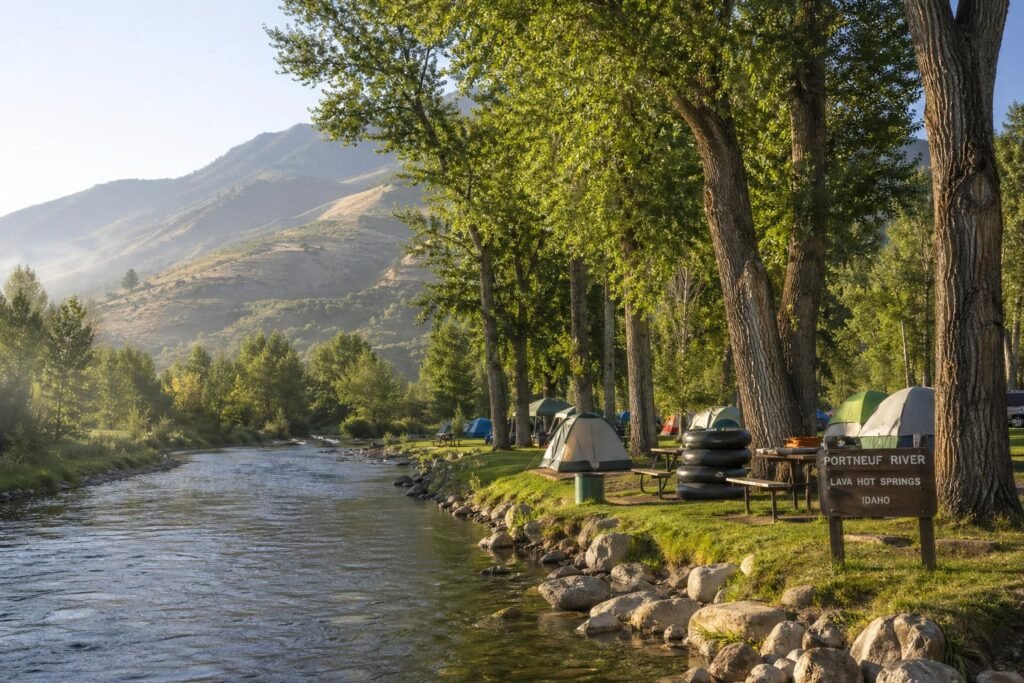
Tents pitched under cottonwood trees along a clear river, inner tubes stacked by picnic tables, mountains in soft focus behind
For hotels, most people end up at one of the mom-and-pop motels on Main Street. Royal Hotel and Riverside Inn are both walking distance to everything—expect $90-140 depending on the season. Nothing fancy, but clean and you can stumble back after soaking in the hot pools at night. Home Hotel Lava has newer rooms if you want something a little less 1970s motel vibes.
Vacation rentals have exploded here in the last few years. We rented a three-bedroom house last summer for $210 a night, which split five ways was cheaper than two hotel rooms. Most are within a few blocks of downtown.
Food is straightforward. Chuck-A-Rama isn’t here—this is a small-town operation. Portneuf Grill does burgers and milkshakes, and their huckleberry shake is absurdly good after a day on the river. We usually grab sandwiches at Main Street Deli before tubing since you can’t really bring much on the water. $8-10 gets you a loaded sub that’ll hold you over.
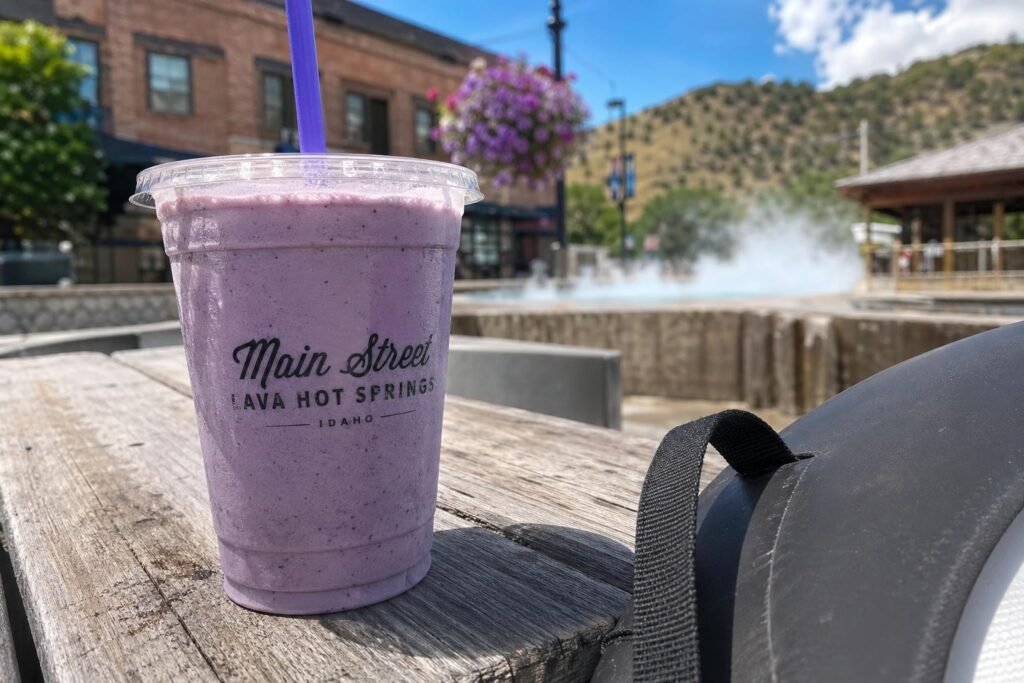
Huckleberry milkshake in a plastic cup on a picnic table, inner tube strap visible at edge of frame, hot springs steam in background
Taqueria El Paraiso is the spot for dinner—$12 gets you carne asada tacos that are better than they have any right to be in a town this size. Banners Café does breakfast if you need eggs and coffee before hitting the river.
Don’t expect fancy. This is fuel, not a culinary destination. But that’s kind of the point.
Best Time to Visit and Insider Tips
The river typically runs from late April through September, but realistically, you want June through August unless you’re comfortable in cold water. I went in late May once and lasted about 20 minutes before my feet went numb—snowmelt is no joke.
July and August are peak season, and weekends turn into a zoo. We’re talking hour-long waits for tube rentals, the put-in looking like a beach invasion, and trying to find parking by 10 a.m. If you can swing a weekday trip, do it. Tuesday through Thursday the river feels like a different place—maybe 30% of the weekend crowd.
Weather in southeast Idaho is high desert, which means hot days and cool nights. Afternoons regularly hit 85-95°F in summer, but mornings can start in the 50s. I always pack a hoodie even in July because once the sun drops behind the mountains around 7 p.m., it cools off fast.
The water level matters more than most people realize. Early season (May-June) means higher, faster water—more exciting but also colder and occasionally sketchy if you’ve got young kids. By August the flow mellows out considerably. You can check the USGS stream gauge for Portneuf River at Lava Hot Springs online before you go. Anything above 500 cfs is swift; below 200 cfs and you’ll be dragging in spots.
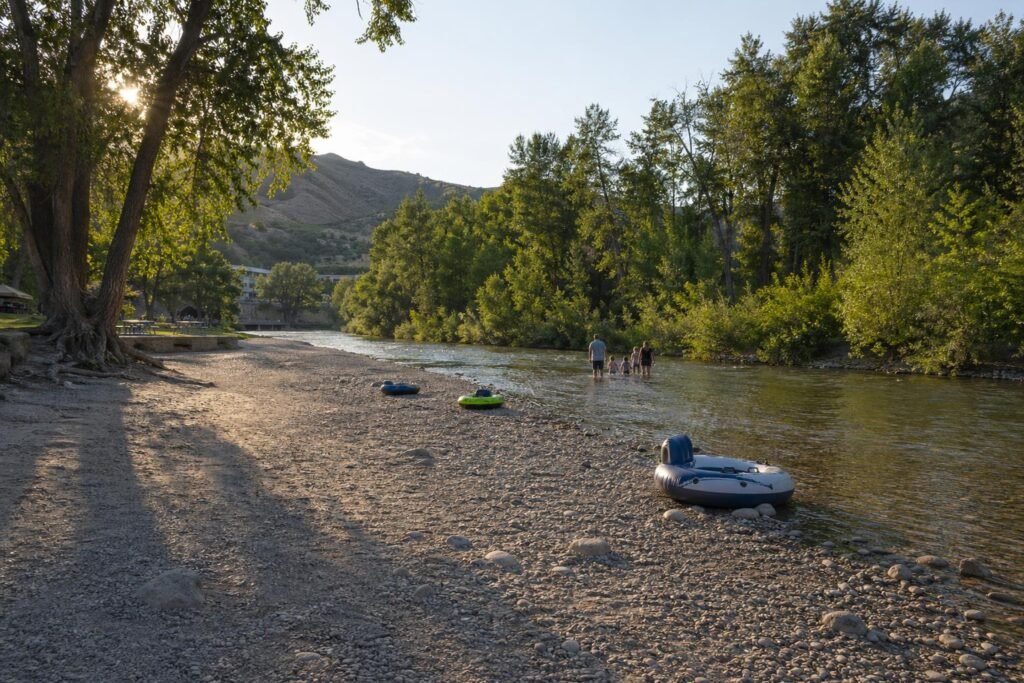
Nearly empty riverbank on a weekday, a few tubes scattered near the water, one family wading in shallow water, cottonwood shadows stretching long
Here’s what I wish someone had told me the first time: bring a $20 bill in a waterproof pouch. Some rental places take cards now, but not all, and you might want to grab a drink from one of the vendors posted along the route. Also, cheap water shoes will save your feet—the river bottom is mostly smooth rocks, but there are random sharp spots.
If you’re doing the hot pools afterward, bring a change of clothes and leave them in your car. Walking around in a damp swimsuit while you’re trying to figure out dinner is miserable. The hot pools stay open until 10 p.m. in summer, so we usually tube in the afternoon, grab food, then soak once it cools down and the crowds thin.
One last thing—the entire town smells faintly of sulfur from the hot springs. You get used to it in about ten minutes, but fair warning if you have a sensitive nose. It’s not overwhelming, just… present. Like a geothermal reminder that you’re somewhere different.