

Adventure travelers and rockhounding enthusiasts looking to combine therapeutic hot springs visits with hands-on crystal mining experiences in Arkansas. · May 1, 2026
Why Hot Springs Arkansas is America’s Hidden Gem for Crystal Hunting
I’ll be honest—when I first heard about digging for crystals near Hot Springs, I pictured some dusty roadside tourist trap. Then I spent three days there and came home with a backpack full of quartz points I pulled from the ground myself.
The Ouachita Mountains around Hot Springs sit on what geologists call the Arkansas quartz belt. It runs roughly east-west for about 175 miles, and it’s one of the richest concentrations of quartz crystals in North America. The formation happened 300 million years ago when heat and pressure pushed silica-rich fluids through cracks in sedimentary rock. Those fluids cooled slowly. Really slowly. That’s why you find crystals here—sometimes the size of your forearm—instead of just milky chunks.
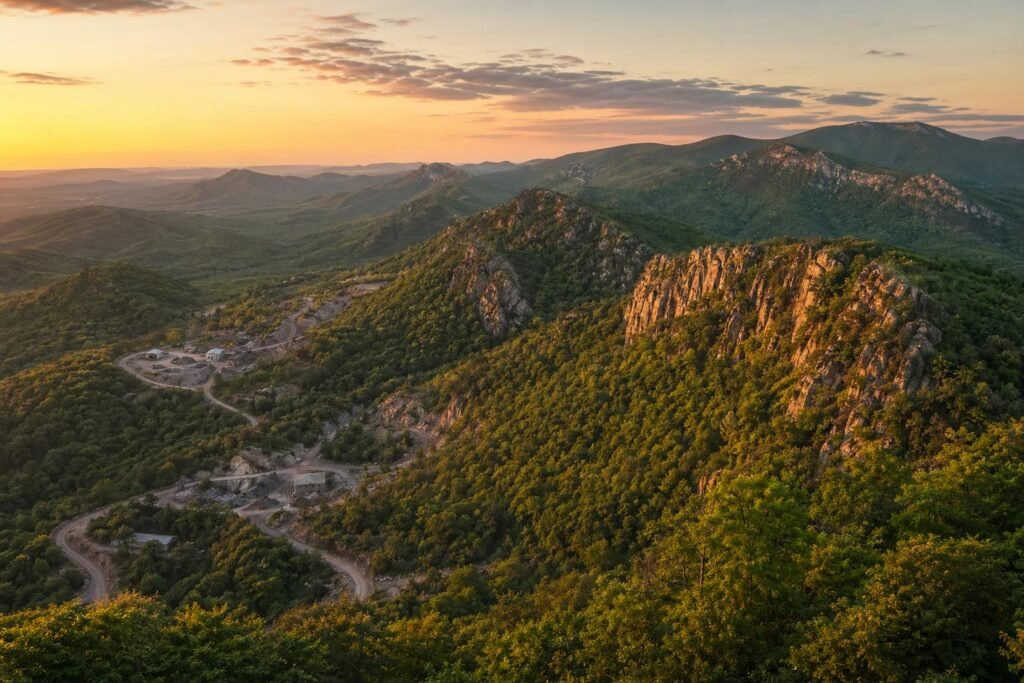
Rolling forested ridges with exposed rock faces catching late afternoon sun, dirt roads cutting between the hills where crystal mines sit tucked in the valleys
What makes Hot Springs weird in the best way is that it’s been a spa town since the 1800s. Bathhouse Row downtown looks like it belongs in Europe. You can soak in 143-degree thermal water in the morning, then drive 20 minutes to dig crystals in red clay all afternoon. I don’t know anywhere else that combination exists.
The thermal springs themselves come from rainwater that seeps down about 8,000 feet, heats up, then resurfaces fast—takes about a year. Completely different geological process than the crystals, but still. The whole area is geologically hyperactive. And most people visiting only do the bathhouse thing, which means the mines stay surprisingly uncrowded.
Best Crystal Mines and Digging Sites Near Hot Springs
Coleman Crystal Mine sits about 14 miles north of Hot Springs off Highway 7. It’s been family-run since the 1960s, and it’s the one I always send people to first. You dig in tailings—material already excavated from the mine—so you’re not swinging a pickaxe into solid rock. More like sifting through rocky dirt with a garden trowel. Admission is $25 per person for the tailings area, and they provide basic tools. I found a double-terminated clear quartz about four inches long my second time there.
The thing about Coleman is they also have what they call the “ore dump” where serious diggers pay $10 more to work harder material. Bigger potential finds. You’ll see people out there with rock hammers and chisels working boulders. Bring gloves—the clay stains everything red and your hands will shred otherwise.
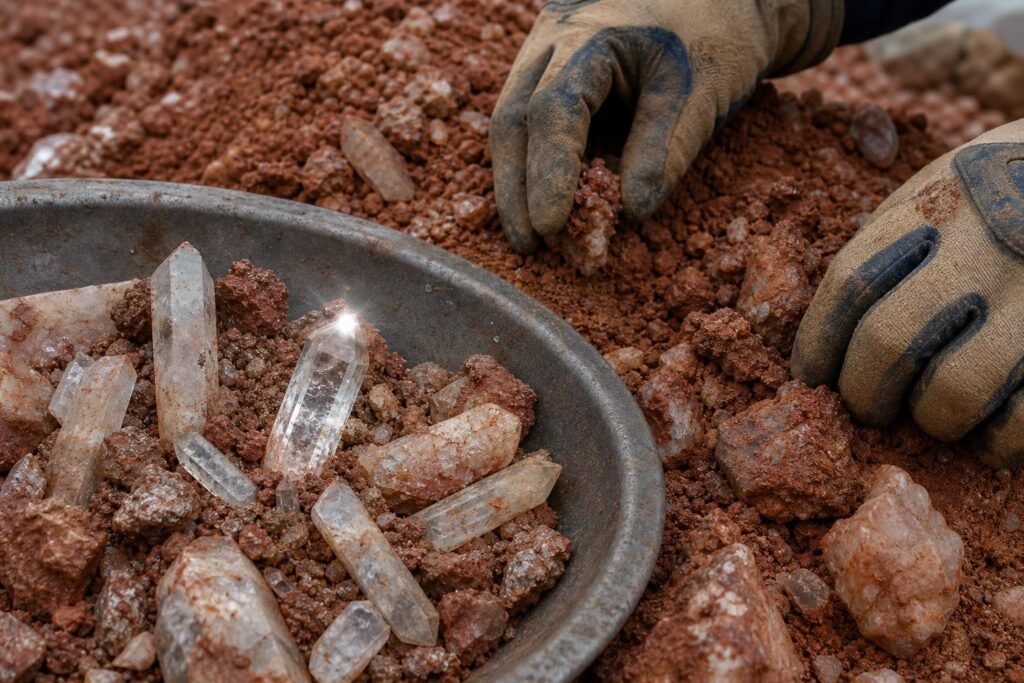
Hands in work gloves sorting through red clay and broken quartz matrix, various sized crystal points scattered in a metal pan, one clear six-sided crystal catching the light
Sweet Surrender Crystal Mine is smaller, about 12 miles northwest near Jessieville. Owner Cheryl keeps it low-key—just a few piles to dig through and a covered pavilion if it rains. $30 per person, no time limit. Most people here go with Sweet Surrender if they’re traveling with kids because Cheryl will actually sit down and explain what you’re looking at. I ended up using their site for a afternoon session last May because Coleman was packed with a tour group, and honestly found better crystals. Lots of smoky quartz, which has that grey-brown tint from natural radiation in the ground.
Ron Coleman Mining (different family, confusing name) runs the biggest operation. They’ve got multiple dig sites including one they call the “Big Dig” where they bring in fresh material weekly. It’s $40 for adults but you’re digging newer tailings so the pick-through rate is better. They also sell buckets pre-filled with crystal-bearing material for $10-15, which sounds like cheating but works if you’re only in town for an afternoon.
One thing nobody tells you: go midweek if possible. Weekends from April through October get crowded, especially Coleman. And bring your own tools if you’re picky. The mines have loaners but they’re beat to hell. A small garden trowel, a spray bottle of water to rinse finds, and a padded bag for crystals. That’s really all you need.
What You’ll Need: Essential Gear for Crystal Digging
Most first-timers show up in tennis shoes and wonder why everyone else is covered in red clay within ten minutes. Arkansas crystal digging is muddy work, especially at places like Coleman Crystal Mine where you’re basically playing in wet dirt all day.
Start with closed-toe boots. Waterproof if you’ve got them. I learned this the hard way at Sweet Surrender Mine during a spring dig when my hiking shoes turned into clay sponges. Steel toe isn’t required, but your feet will thank you when you drop a rock hammer.
Bring two pairs of gloves. Cheap cotton ones get soaked and useless fast. I keep leather work gloves for digging and a backup pair because you will tear through the first set. Your hands are going to get destroyed otherwise—quartz edges are sharp, and that red clay stains everything.
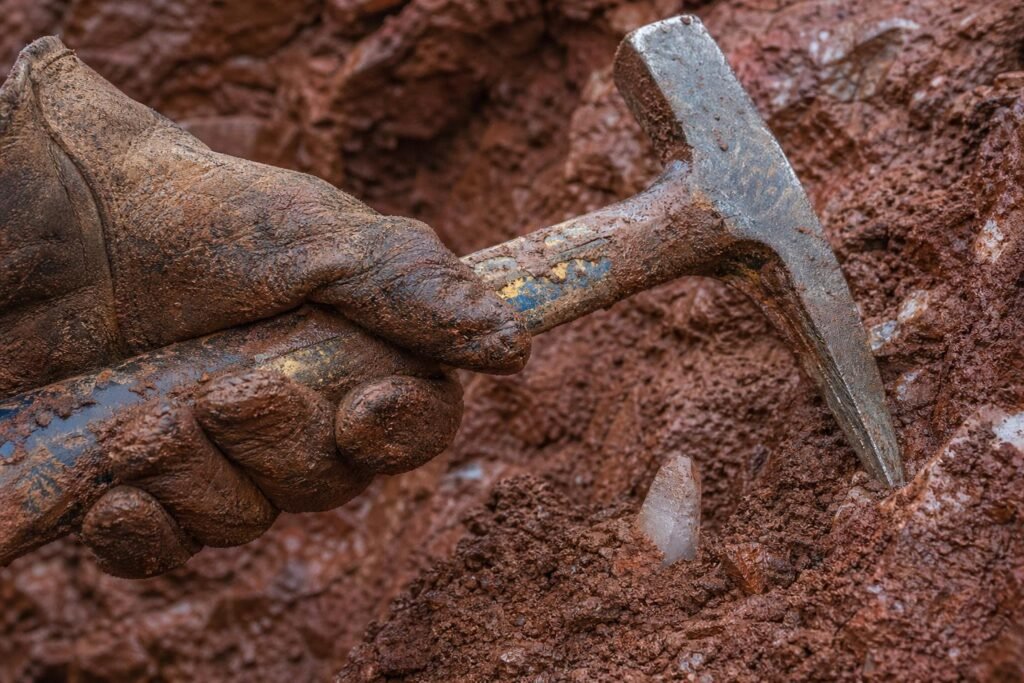
Dirt-crusted leather gloves gripping a muddy rock hammer, fresh quartz point barely visible in red clay background
For tools, most mines rent or provide basic equipment, but serious diggers bring their own. A pointed rock hammer (16 oz is plenty), a flat-head screwdriver for prying, and a small garden trowel. At Ron Coleman Mining, the rental buckets and shovels work fine, but I ended up using a compact folding shovel from my camping kit because the handles on shared equipment are always loose or splintered.
The 5-gallon bucket is your friend. Bring at least two—one for digging, one for your good crystals. Wrap finds in newspaper or paper towels. Ziplock bags work, but crystals can scratch each other if you’re tossing multiple pieces in together.
Sun protection matters more than you think. These dig sites have zero shade. Wide-brimmed hat, long sleeves if you burn easy, and reapply sunscreen every couple hours. I saw someone at Wegner Quartz Mine turn lobster-red by noon in July because they figured Arkansas spring weather wouldn’t be that harsh.
Pack a small cooler with water and snacks. You can spend 4-6 hours digging if you’re into it, and most mines don’t have food on-site. Coleman has a gift shop with drinks, but you’ll pay tourist prices. I bring frozen water bottles—they melt by lunch and keep everything else cold.
One thing nobody mentions: a change of clothes and towels in your car. You will be filthy. That clay doesn’t just brush off. I keep a plastic tub in my trunk now with wet wipes and a clean shirt because stopping for gas on the way back to Hot Springs looking like you murdered someone gets awkward.
How to Find and Identify Quality Quartz Crystals
The best crystals aren’t sitting on the surface waiting for you. They’re in the clay pockets between decomposed rock layers, usually 1-3 feet down where most casual diggers give up.
At Wegner, I watched a guy pull out a double-terminated point the size of my thumb from a spot twenty people had already worked over. He was scraping horizontally along a clay seam instead of just digging straight down. That’s the difference. You’re looking for where the white quartz vein intersects with the softer red or gray clay—that’s where crystals break free intact.
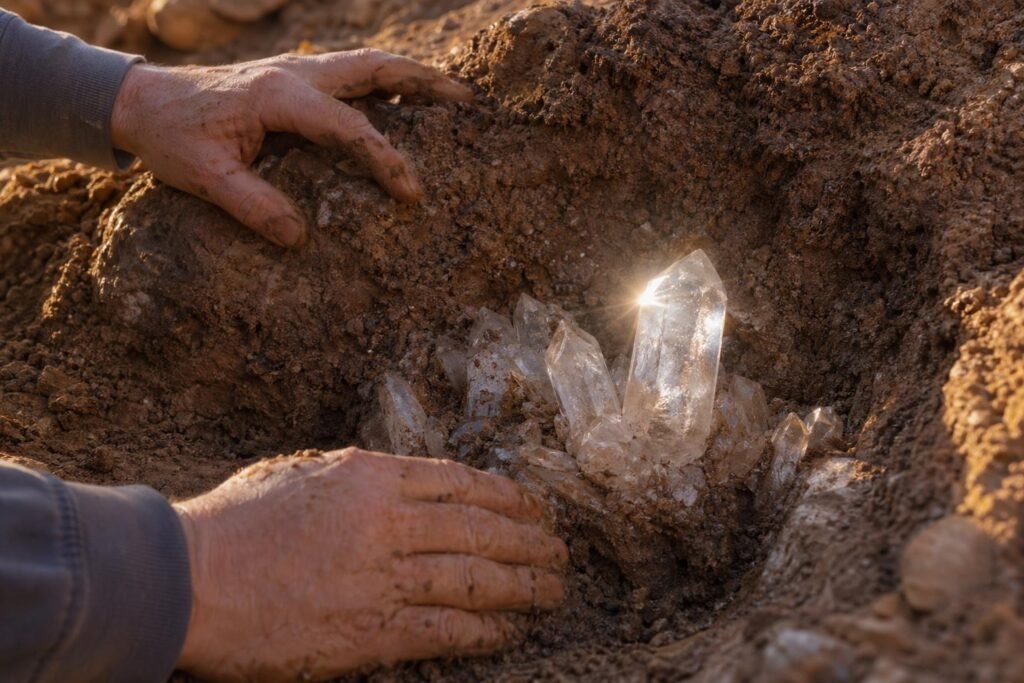
Hands brushing dirt from a clay pocket revealing cluster of clear quartz points, one larger crystal reflecting sunlight
Quality comes down to clarity, termination, and size. A clear crystal with a complete six-sided point at the end beats a cloudy chunk twice the size. Hold it up to sunlight—you want to see through it, or at least through sections of it. Milky white quartz is common and fine for beginners, but collectors pay for optical clarity.
Double-terminated points (pointed on both ends) are rare because both ends had to form freely without attaching to matrix rock. I’ve found exactly three in probably 40 hours of digging across multiple sites. They’re worth keeping even if small.
Phantoms are the weird ones—you can see a ghost outline of an earlier crystal growth stage inside the current crystal. They look like a crystal within a crystal. These show up maybe 5% of the time at Coleman, and rockhounds lose their minds over them. Check every clear crystal closely before you toss it in your bucket.
Clusters beat single points for display. A plate with multiple crystals radiating out looks better on a shelf and proves the formation was undisturbed. But they’re heavy and fragile. I’ve cracked more good clusters trying to free them from matrix than I want to admit.
Surface condition matters if you’re selling or trading. Damaged tips (“chipped terminations”) drop value immediately. Iron oxide staining—that rusty orange coating—is natural and some people like it. You can clean it with oxalic acid (wood bleaner) if you’re patient, but I usually leave it. The staining proves it’s Arkansas quartz.
Size is overrated. A crystal clear 2-inch point with perfect termination is more valuable than a 6-inch cloudy slug. Most of what you’ll find is 1-3 inches. Anything over 4 inches with good clarity is a legitimate score worth photographing before you leave the mine.
The feel matters too. Crystals have weight to them—if it’s too light for its size, it’s probably mostly matrix rock with a crystal face showing. Learn to judge weight in your palm. After a few hours, you’ll start recognizing the good ones by heft alone.
Combining Crystal Digging with Hot Springs Attractions
Most people don’t realize Hot Springs National Park sits just 45 minutes from some of Arkansas’s best crystal mines. I’ve done this loop three times now, and the combination works better than you’d think—spend your mornings digging in the dirt, afternoons soaking sore muscles.
Start your mornings at the mines. Coleman Crystal Mine opens at 8:30 AM, and you want those first hours before the sun gets brutal. Three hours of digging is plenty. By noon, you’re dusty, your back’s complaining, and you’ve got a bucket of quartz ready to clean.
Drive back to Hot Springs and hit Bathhouse Row by 2 PM. The Buckstaff Bathhouse still does traditional bathing—you lie in a cast-iron tub filled with 102-degree thermal water while attendants wrap you in hot packs. Costs $37 for the full treatment. After kneeling in creek beds all morning, this isn’t luxury, it’s necessary.
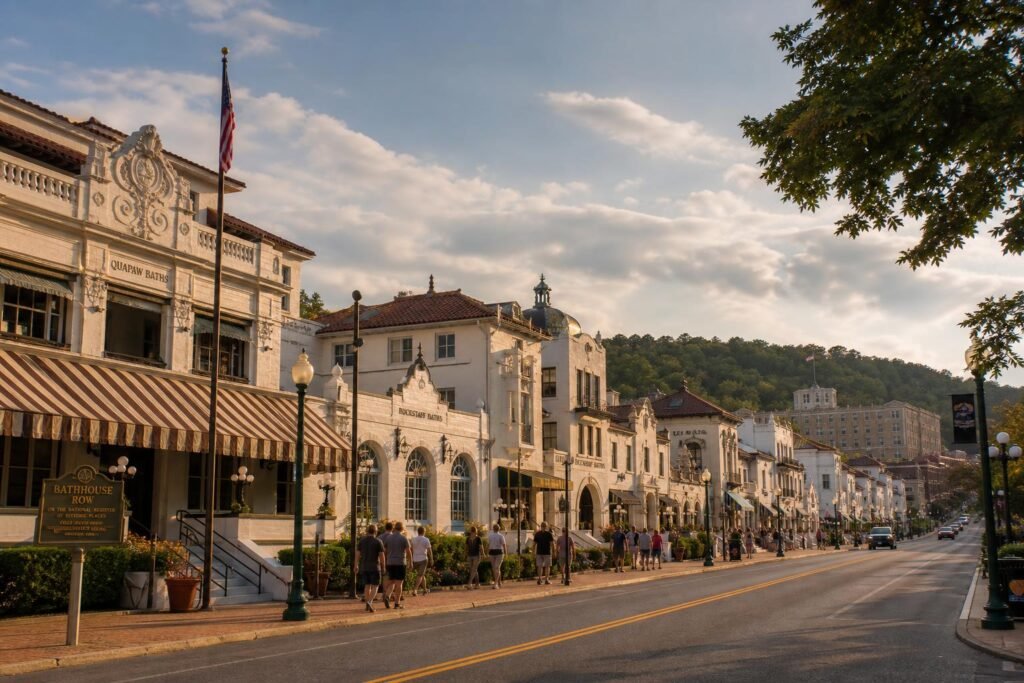
Eight grand Spanish Colonial Revival bathhouses line Central Avenue, their white facades catching warm light while tourists walk the brick sidewalks between them
The Fordyce Bathhouse is free and worth an hour. It’s now the park visitor center, but they’ve kept the stained glass, marble fountains, and the whole 1915 spa setup intact. You can see the hydrotherapy equipment they used—needle showers, vapor cabinets that look like medieval torture devices.
For dinner, walk to Superior Bathhouse Brewery. Only brewery I know of that uses thermal spring water for their beer. The Hot Springs IPA tastes like regular IPA, but the building’s worth it—another restored bathhouse with the original tile work.
If you’re staying multiple days, Lake Ouachita’s 20 minutes west. I took my finds there to clean them properly—the lake’s clear enough to spot bass from the shore, and way less crowded than Hamilton Lake closer to town. Bring a bucket and some brushes. The public boat ramps have water spigots.
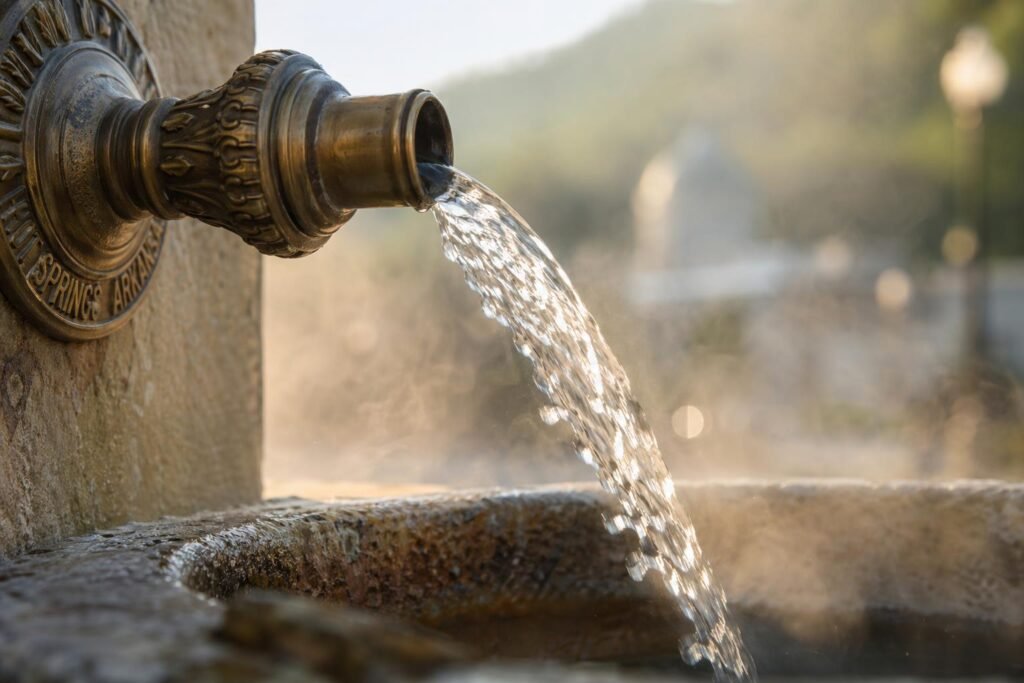
Stream of clear thermal water pouring from an ornate brass spigot into a stone basin, slight steam rising, morning sun catching the water mid-flow
Magic Springs theme park sits north of town if you’re traveling with kids who aren’t into rocks. I haven’t been, but the families at Coleman mine mentioned it keeps teenagers busy for a day. The park combines roller coasters with a water park—practical in Arkansas summers.
Don’t skip the Grand Promenade behind Bathhouse Row. It’s a half-mile brick walkway up the hill, built in 1880-something. Connects to the trail system that goes up Hot Springs Mountain. The sunset tower trail’s only 1.2 miles but climbs 550 feet. After a day at the mines, your legs will have opinions about this.
Downtown Hot Springs still has the old bathhouse district vibe—antique stores, rock shops selling local crystals at markup, cafes with tin ceilings. The Ohio Club on Central Avenue claims to be Arkansas’s oldest bar. Capone supposedly drank there during the town’s gambling era. Now it’s burgers and local bands on weekends.
Best Times to Visit and Booking Your Dig
April and October are your windows. I learned this the hard way after digging in July heat that hit 97 degrees by 10 AM. Spring means mud, fall means perfect dirt—loose enough to dig, dry enough not to cake on everything.
Most mines run April through October. Coleman and Wegner stay open year-round, but several smaller operations close November through March. Call ahead. I showed up to Arrowhead Crystal Mine one November to find a locked gate and no phone signal to check why.
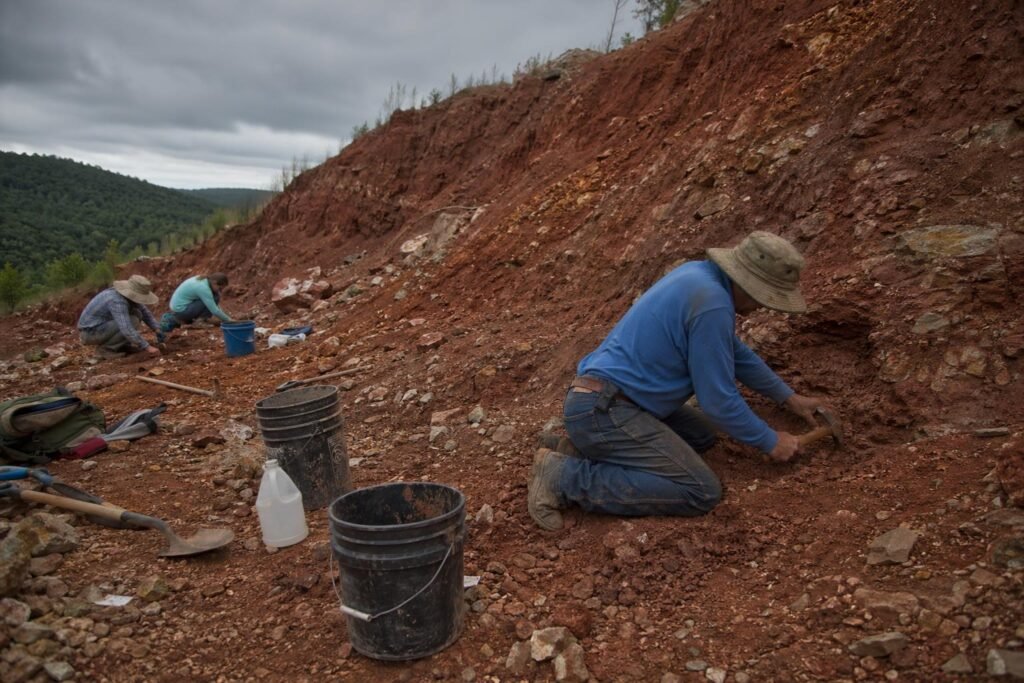
Scattered digging tools and buckets beside a red clay hillside, a few people crouched working the dirt, gray sky threatening rain
Summer brings the crowds. June through August, you’re competing with family vacations and school groups. Sweet Surrender Crystal Mine gets booked two weeks out in July. The popular mines get picked over fast—I’ve had better luck finding decent crystals in May than mid-summer.
Weather shifts fast in the Ouachitas. Spring means thunderstorms rolling through most afternoons. I’ve been rained out twice, both times in May. The mines don’t refund for weather, and digging in downpours turns the sites into red clay slip-n-slides. Check the hourly forecast, not just the daily.
Book crystal digs at least a week ahead for April, May, September, October. Two weeks for June through August. Coleman takes walk-ins usually, but you might wait an hour for a spot. Wegner Crystal Mine fills up their surface digging on weekends—I once drove down Friday evening only to get told they were full until Monday.
Most Hot Springs hotels fill up during the horse racing season at Oaklawn—late January through May. I ended up using Booking.com because they had same-day availability when I arrived during race week and everything else was sold out. The rates jumped 40% during racing weekends. (→ OFFER: Booking.com)
Mid-week visits work better. I did a Tuesday-Thursday trip in September—half the people at the mines, cheaper hotel rates, and restaurants weren’t slammed. The difference between weekend and weekday crystal hunting is finding three decent points versus a dozen.
Some mines require reservations, period. Ron Coleman Mining won’t let you show up unannounced anymore. They book online through their website or by phone. Wegner Mine takes walk-ins for surface digging but books the tailings pile access. Know which type you’re doing before you go.
The thermal baths don’t need booking except Quapaw Baths & Spa—they do appointments for the private pools. Buckstaff takes walk-ins but expect a 30-minute wait on weekends. I just show up now.
If you’re flying in, Little Rock airport’s an hour away. Rent a car. There’s no other practical way to reach the mine areas. I tried researching shuttles once—they don’t exist for this. The mines are too spread out across the county.
Where to Stay: Accommodations for Crystal Hunters
The best base for crystal digging isn’t actually in Hot Springs proper—it’s about 30 minutes northwest near Mount Ida, the self-proclaimed quartz crystal capital of the world. But if you want the full experience (hot springs soaking plus mining), Hot Springs works fine. You’ll just be doing more driving.
In Hot Springs, the Arlington Resort Hotel sits right on Bathhouse Row. Rooms start around $130, and you can soak in their thermal baths after a day of digging mud out from under your nails. The place is a bit dated—think 1970s grand hotel—but that thermal water piped directly into your room makes up for the carpeting choices.
Budget route? The Lookout Point Lakeside Inn runs $65-85 and has actual parking, which matters when your trunk is full of rocks. It’s on Lake Hamilton, about 10 minutes from downtown.
If you’re serious about mining and plan to hit multiple dig sites, stay in Mount Ida instead. The Shangri-La Lakeside Resort has basic cabins for $80-100 and you’re literally 15 minutes from Coleman Crystal Mines and Wegner Crystal Mines. The owners know the mining scene and can tell you which sites are producing well that week.

White multi-story hotel with vintage awnings on Bathhouse Row, a few guests walking the sidewalk, Ouachita Mountains visible in background
Airbnbs near Mount Ida have gotten wise to the rockhounding crowd. I saw several listings advertising “rock washing stations” and “mudrooms for dirty boots.” One cabin owner even provides 5-gallon buckets and wire brushes as amenities. That’s the level of specificity you want.
The Royale Motel in Mount Ida is nothing fancy—$60 a night, cement block construction—but the parking lot at 7 AM looks like a rockhound convention. Half the trucks have out-of-state plates and buckets in the back. You’ll probably get better mining intel at breakfast there than anywhere else.
Taking Your Treasures Home: Cleaning, Displaying, and Shipping Tips
Your crystals will come out of the ground looking like muddy potatoes. Don’t try cleaning them at your hotel sink unless you want to explain sediment clogs to housekeeping.
Most mines have wash stations with hoses and scrub brushes. Use them. Get the bulk mud off before you pack anything. For Arkansas quartz, a stiff brush and water is usually enough—these aren’t delicate desert roses that’ll crumble. The iron oxide staining that makes some crystals look rusty? That’s permanent. Don’t scrub yourself into frustration.
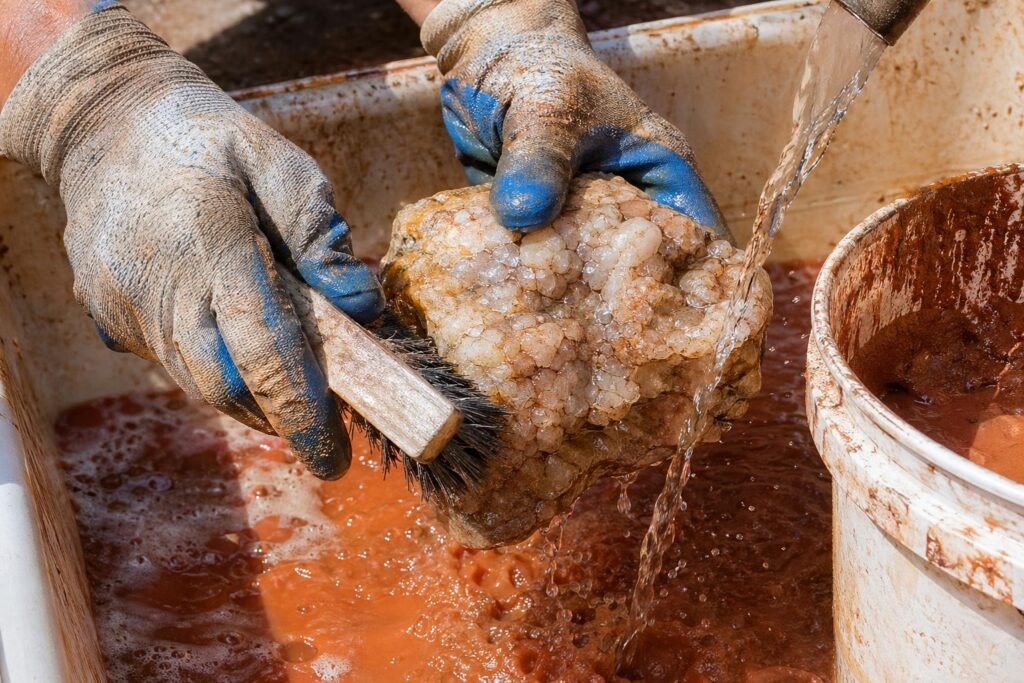
Hands in work gloves scrubbing mud off a chunky quartz cluster under running water, wire brush and bucket visible, red clay sediment swirling in white basin
Once you’re home, soak stubborn pieces in warm water with dish soap for a few hours. An old toothbrush gets into crevices. For really embedded clay, some people use CLR or Iron Out—test on an inconspicuous spot first. I’ve never bothered. The dirt tells a story.
Packing for travel is where people mess up. Wrap each crystal individually in newspaper or bubble wrap. Then pack them tight in a hard-sided container so nothing shifts. Rolling around in a cardboard box will chip termination points. I use those plastic storage bins with snap lids—the $8 ones from Walmart work fine.
If you’re flying, crystals go in checked luggage. They’ll show up as dense masses on X-rays and occasionally get hand-inspected, but TSA is used to it. I’ve never had one confiscated. Just don’t pack them with anything electronic or they’ll definitely open your bag.
For serious hauls, ship instead of schlepping. The UPS Store in Hot Springs knows the drill—they see rockhounds every week. Double-box your stuff (box within a box with padding between), mark it fragile, and insure it for what you’d actually be upset about losing. Shipping 40 pounds of crystals runs about $45-60 to most places in the US.
Display-wise, forget those acrylic stands unless your crystals have perfectly flat bottoms (they won’t). Museum putty or poster tack works better—just stick them where you want on a shelf. I keep mine in a wooden printer’s tray with small compartments. Looks intentional, keeps them from becoming clutter.
Some people get into labels—location, date, who you were with. I tried that for about three months. Now I just remember the good ones and forget the rest, which is probably how it should be.